Manuscript Portal® · user guide for authors
How to submit a manuscript
Submit, track and revise your manuscript on the Manuscript Portal only. Submission takes five steps; you can save at any point and continue later. The screenshots on this page use a sample manuscript and fictional names.
Before you start: checklist
Have these ready. Read the Author Guide first.
- The first page is a separate file with the title, all authors in order, affiliations, emails and the corresponding author.
- The main manuscript has no author names (double-blind review).
- Abstract of up to 200 words; 4 to 6 highlights of up to 75 characters each; 4 to 6 keywords.
- Names, affiliations and emails of at least 3 suggested reviewers, with three keywords each.
- Tables in editable Word files; each figure as its own image file (photographs and maps at 300 dpi, line art at 600 dpi; JPG, PNG or TIFF).
- A captions file for figures and tables, and a graphical abstract if the journal asks for one.
- A cover letter (you can type it in the form).
- Every source cited, and every reference cited in the text listed under References.
- Language checked for spelling and grammar, and the Author Guide followed.
Sign in
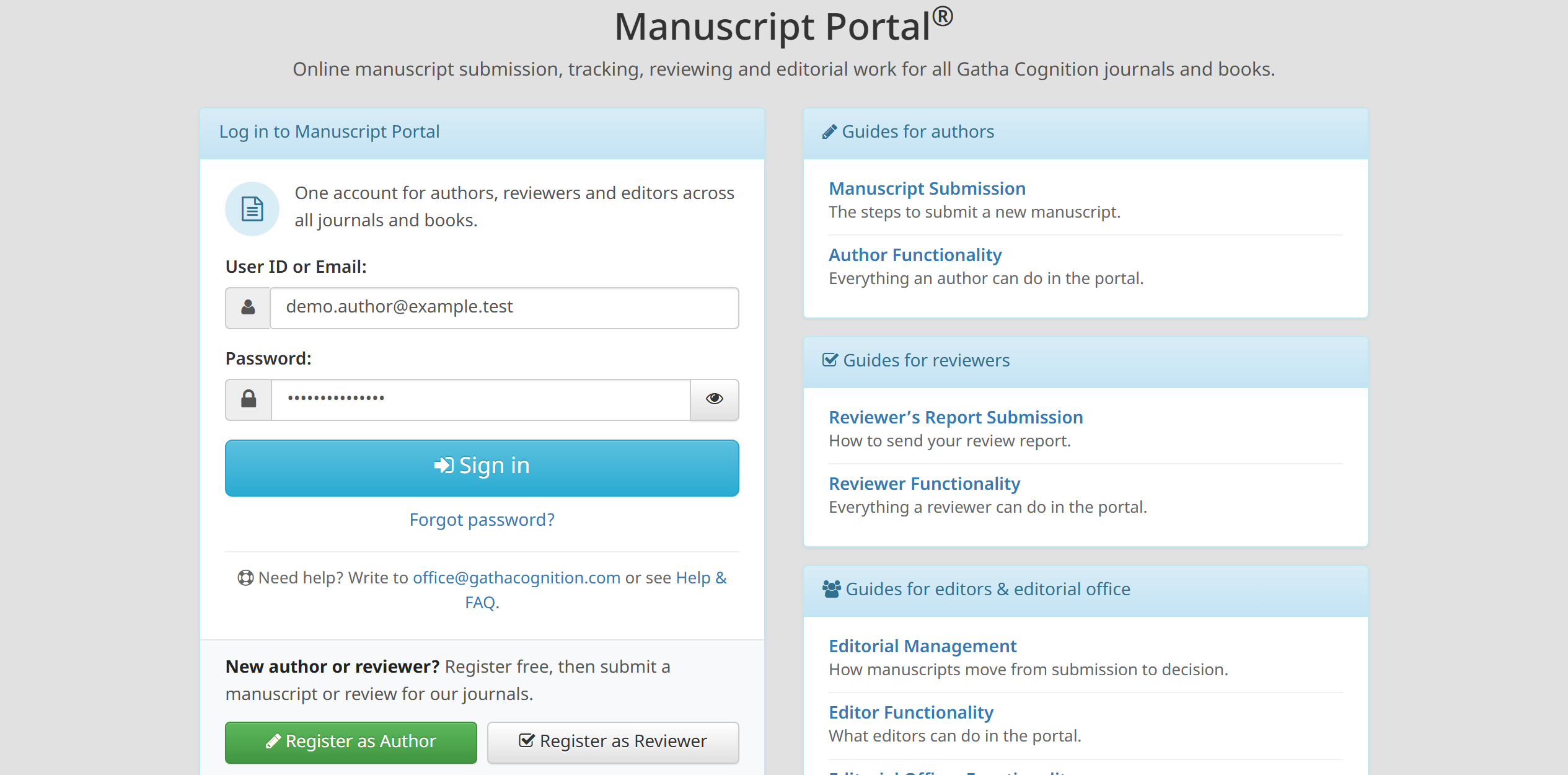
- Open the Manuscript Portal and sign in with your User ID or email and your password. The eye icon shows the password as you type.
- New here? Click Register as Author. Forgot your password? Click Forgot Password and we email you a link to set a new one.
- Sign in with ORCID: after you click Connect ORCID iD in My Profile (ORCID confirms the iD is yours), you can sign in with ORCID instead of your password. Disconnect in My Profile stops it.
- One account works for all your roles (author, reviewer, editor). If you have more than one, you choose the role to start with right after signing in, and switch roles later from the menu with your name.
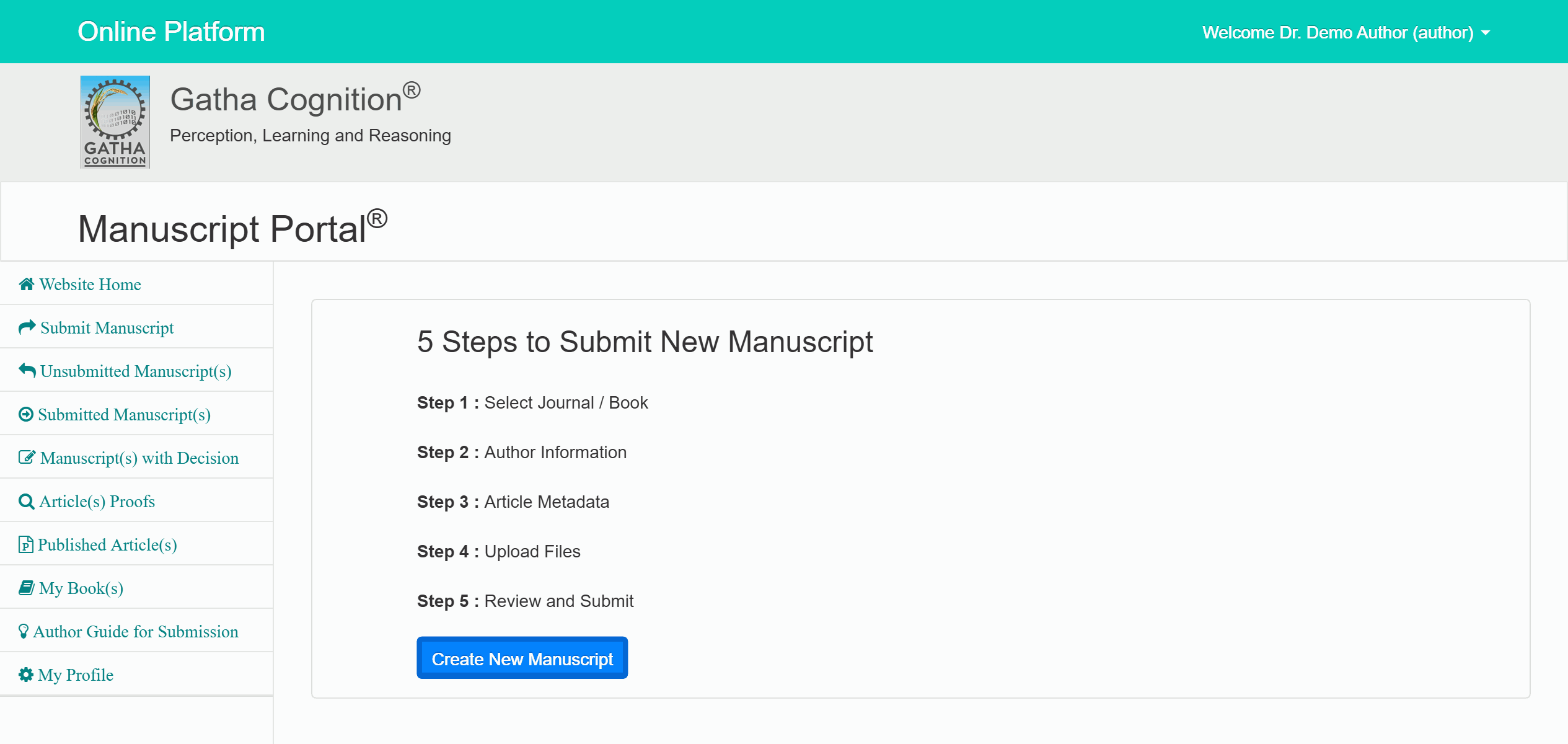
After signing in you see your author home page. Click Create New Manuscript (or Submit Manuscript in the menu) to begin.
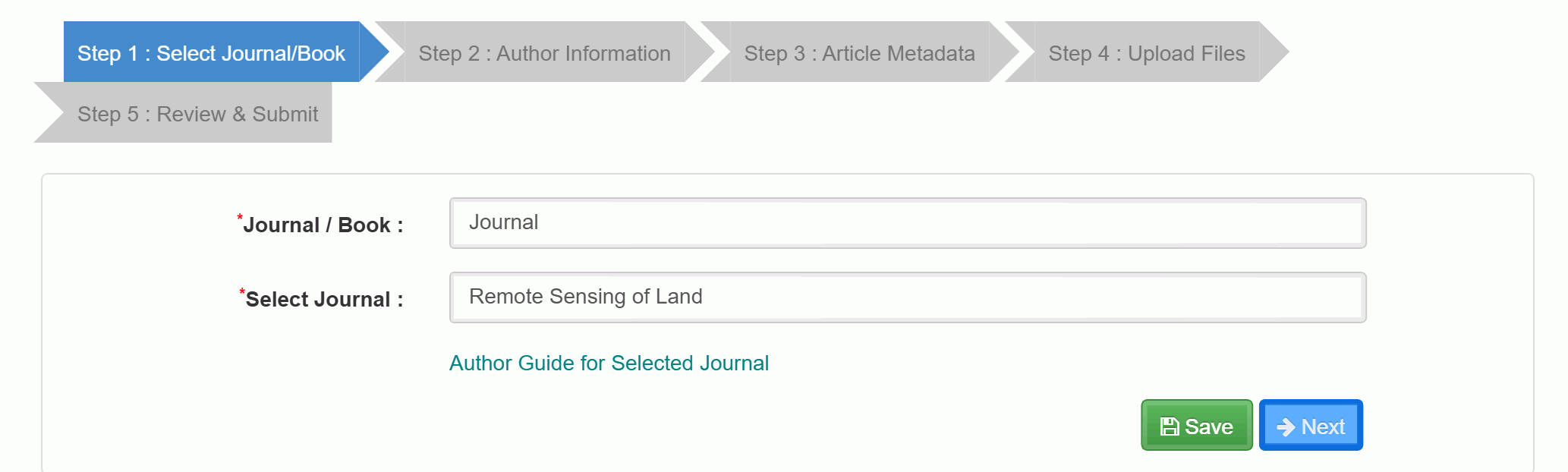
Select the journal or book
- Choose Journal or Book, then select its name.
- The Author Guide for Selected Journal link opens the Author Guide with that journal’s details.
- Click Save, then Next. A saved step turns green.
Author information
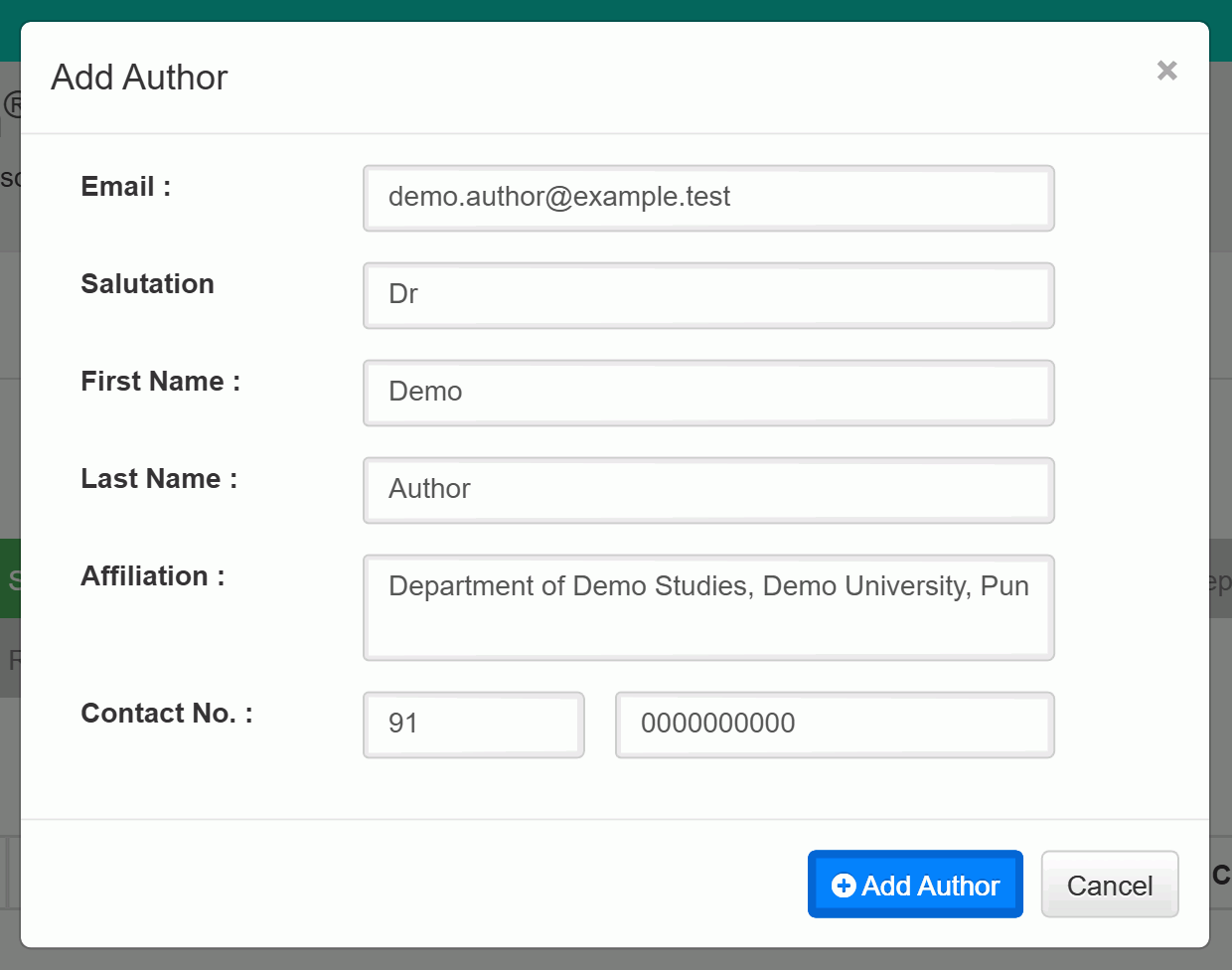
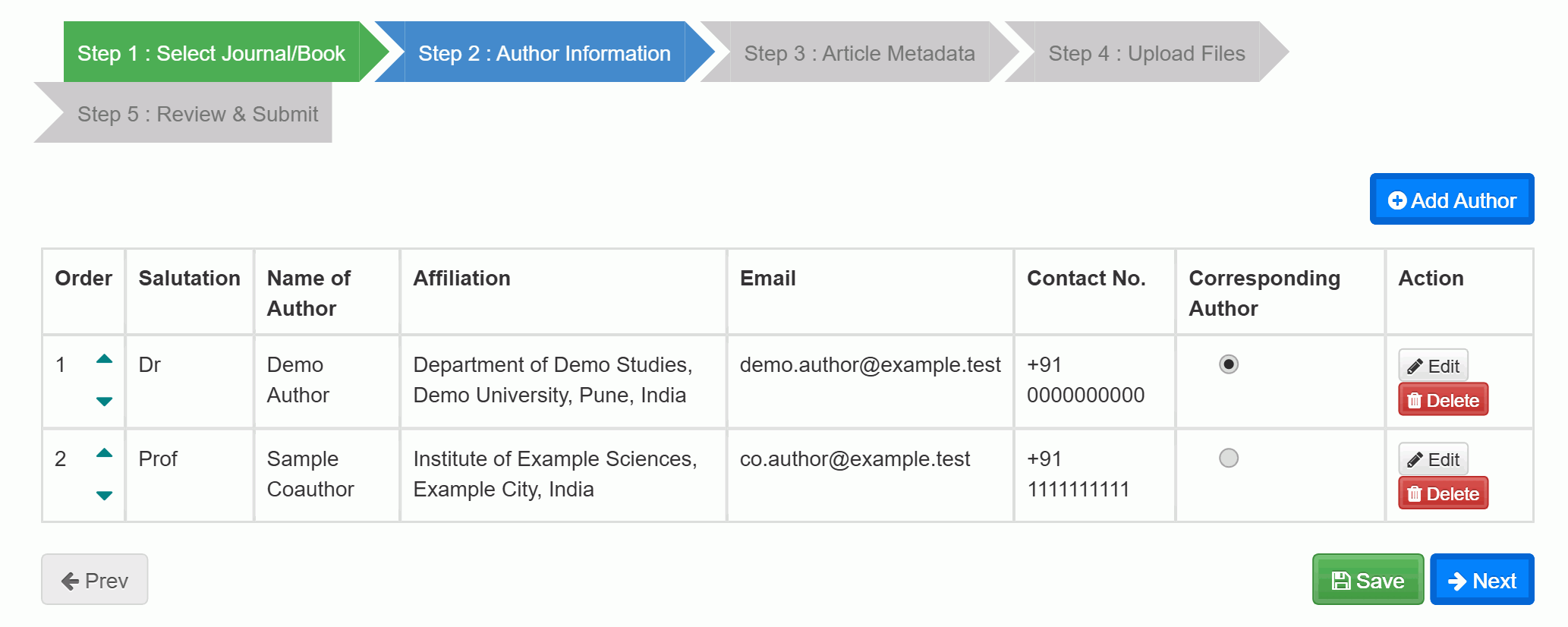
- You, as the submitting (corresponding) author, are listed first automatically.
- Click Add Author, type the co-author’s email and click ADD. If the person already has an account, the details fill in by themselves; otherwise type the salutation, first and last name, affiliation and phone number.
- If you know the co-author’s ORCID iD, type it beside the email and click Fetch from ORCID: the empty boxes fill in from the person’s public ORCID record (and the email too, if it is public there). Check them before you save.
- Affiliation is the institute where the research was done. Choose it from our list (or the world registry of institutes shown under it), add the department, and type it only if it is not found.
- Add every author here, not only yourself: the author names on the published paper come from this list. If you save with only one author, the portal asks you to confirm.
- Co-authors get emails about the manuscript and can view it in their own account.
- Use the arrows to put the authors in the right order, Edit or Delete an author, and pick the corresponding author. Only the corresponding author can edit, submit and revise.
- Click Save, then Next.
Article metadata
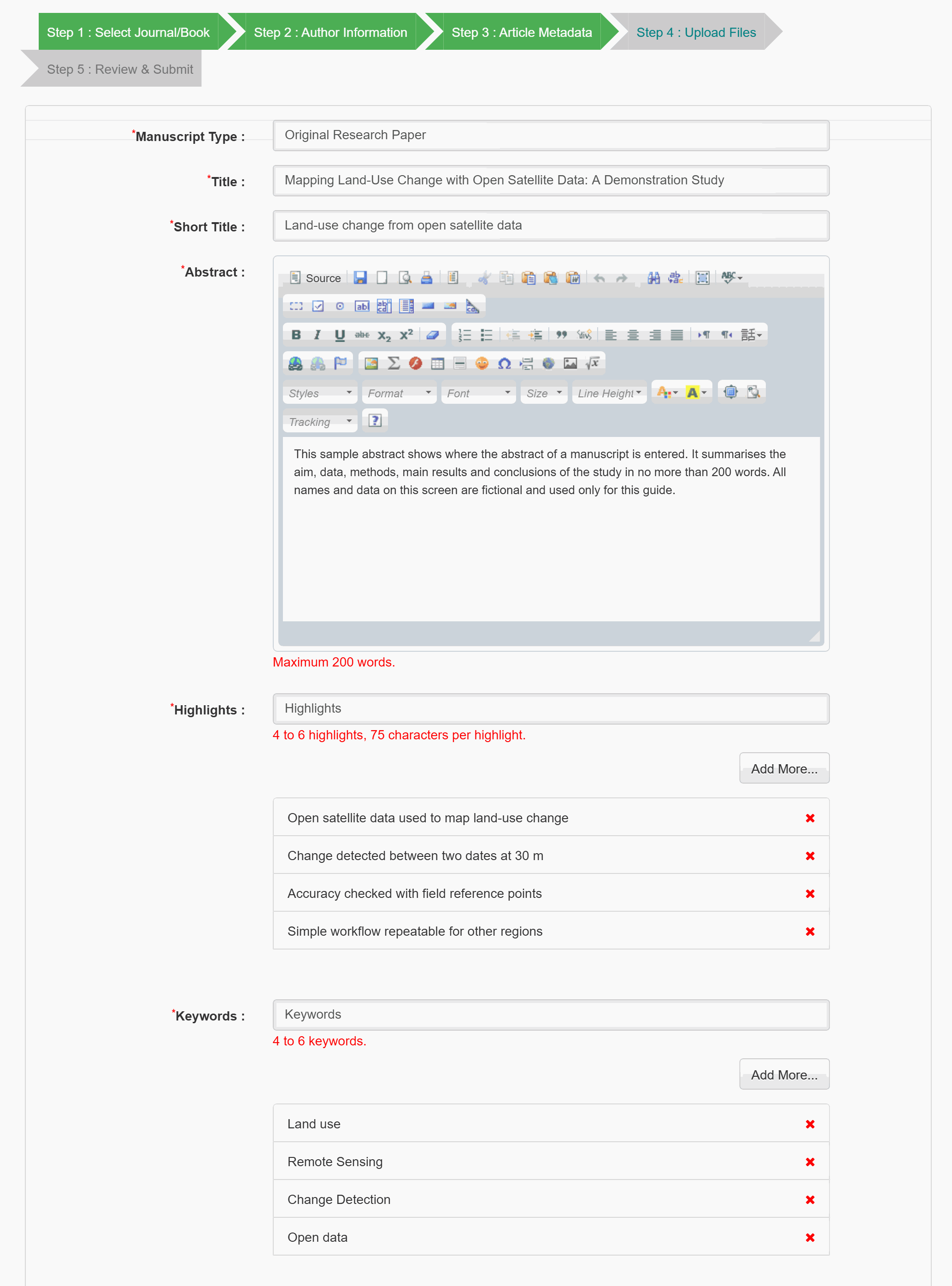
- Select the manuscript type and enter the title, a short title (running head) and the abstract (up to 200 words). The abstract box has an editor for formatting and equations.
- Type each highlight (4 to 6, up to 75 characters each) and click Add More…; do the same for the keywords (4 to 6). As you type, matching keywords from our list appear: choose one where you can, or add yours as a new keyword. The red cross removes one.
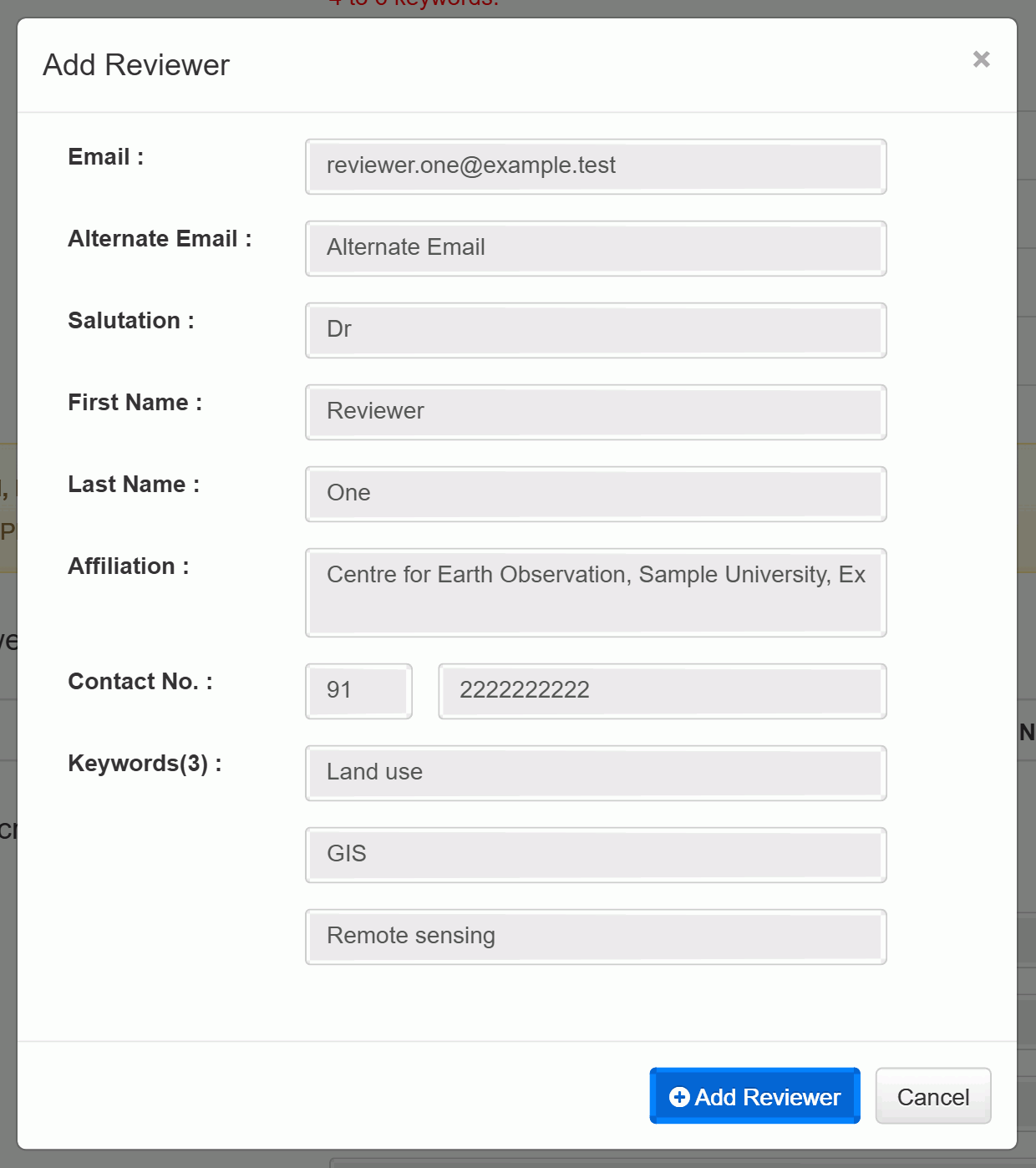
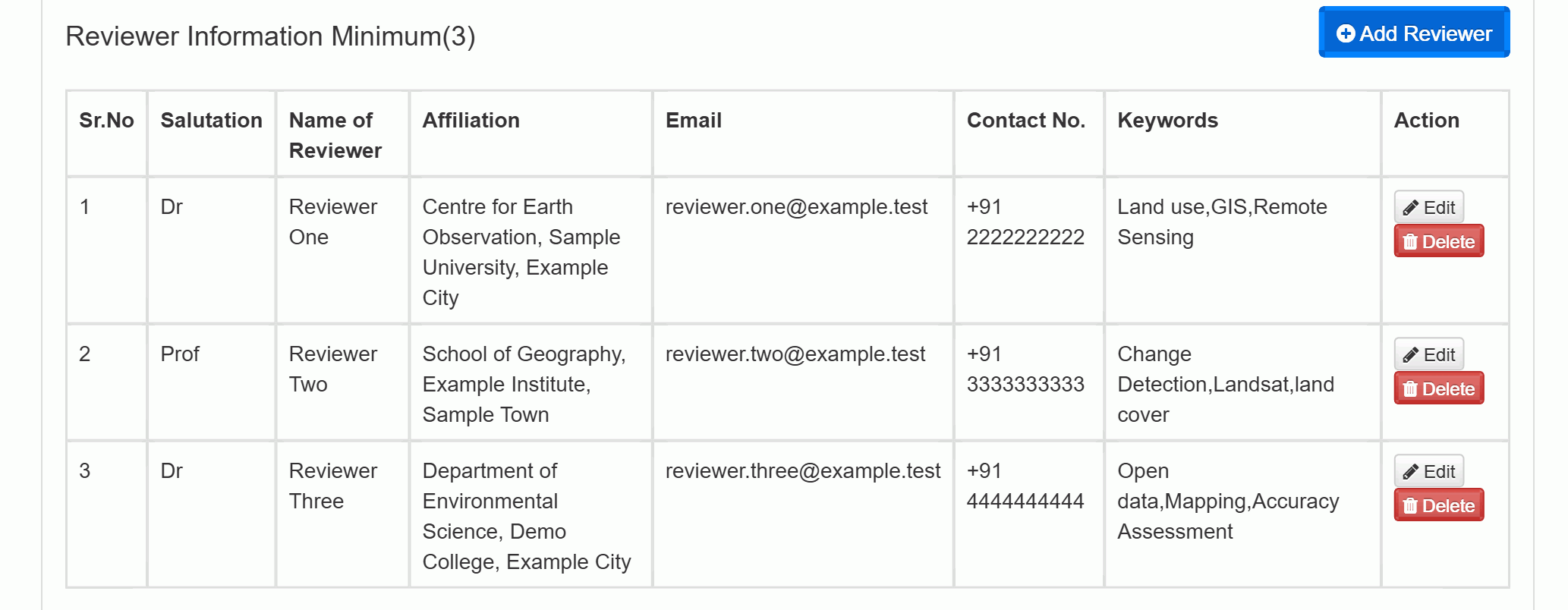
- Under Reviewer Information, click Add Reviewer and suggest at least three experts: email, name, affiliation, phone and three keywords of their expertise. Fetch from ORCID works here too.
- The editor decides whom to invite; your suggestions help.
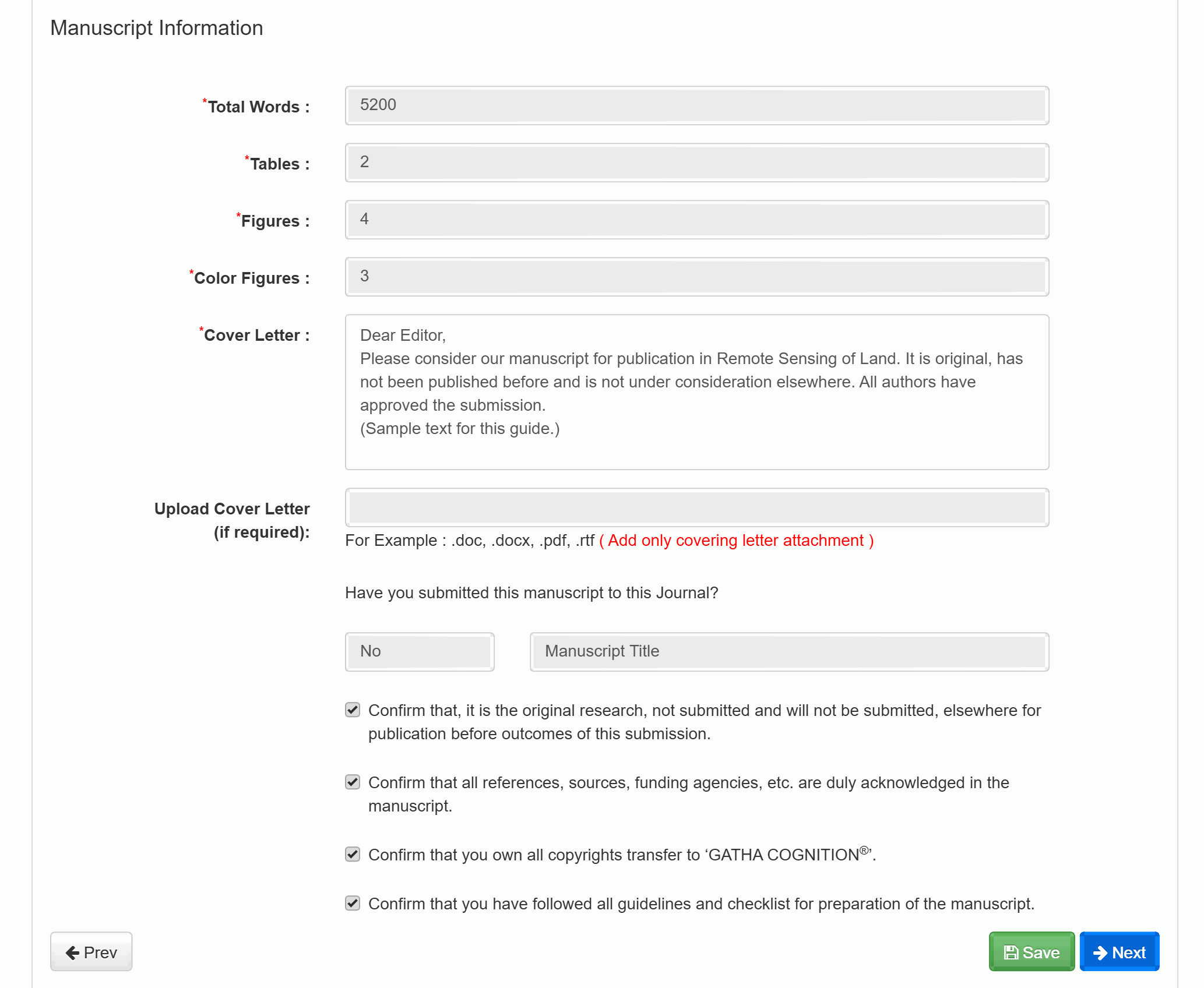
- Under Manuscript Information, give the total words and the number of tables, figures and colour figures (0 is allowed).
- Write your cover letter to the editor in the box. Upload a cover-letter file only if needed; do not upload manuscript files here.
- Say whether you submitted this manuscript to this journal before, and tick the four confirmations.
- Click Save. If anything is missing, the page lists exactly what; when the step is complete it turns green.
If you used generative AI tools in preparing the manuscript, say so in the cover letter and in the Methods or Acknowledgments. See the AI Use Policy.
Upload files
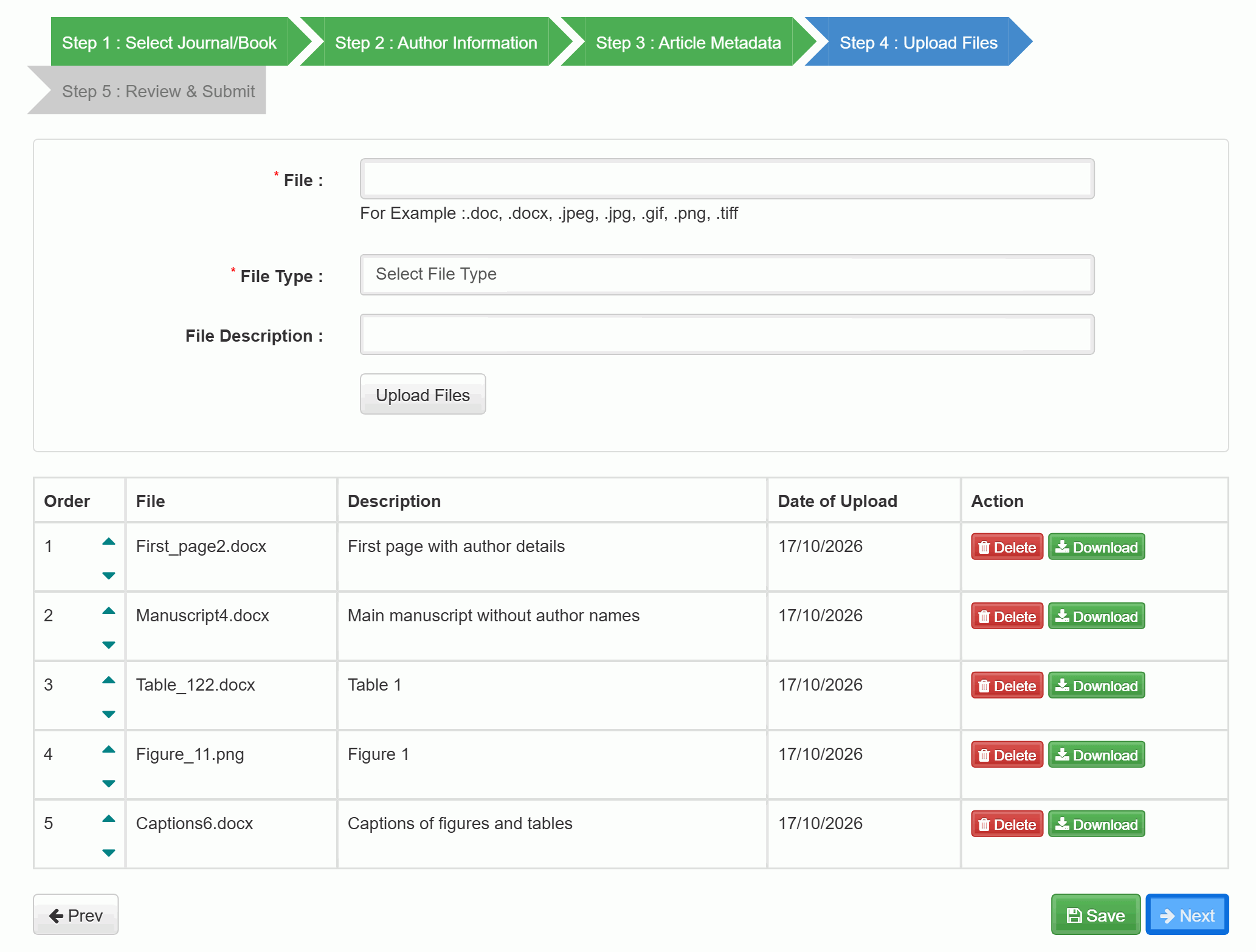
- For each file: Choose File, select the File Type (First Page, Main Manuscript, Image, Table, Caption or Graphical Abstract), add a short description and click Upload Files.
- The First Page and the Main Manuscript are required. Upload one table or one figure per file, and editable originals (.doc/.docx for text and tables; JPG, PNG, TIFF or GIF for images).
- Use the arrows to set the order of the files; Download or Delete a file if needed.
- Click Save: the portal joins your files into one PDF. Please wait a moment while it is built.
Review and submit
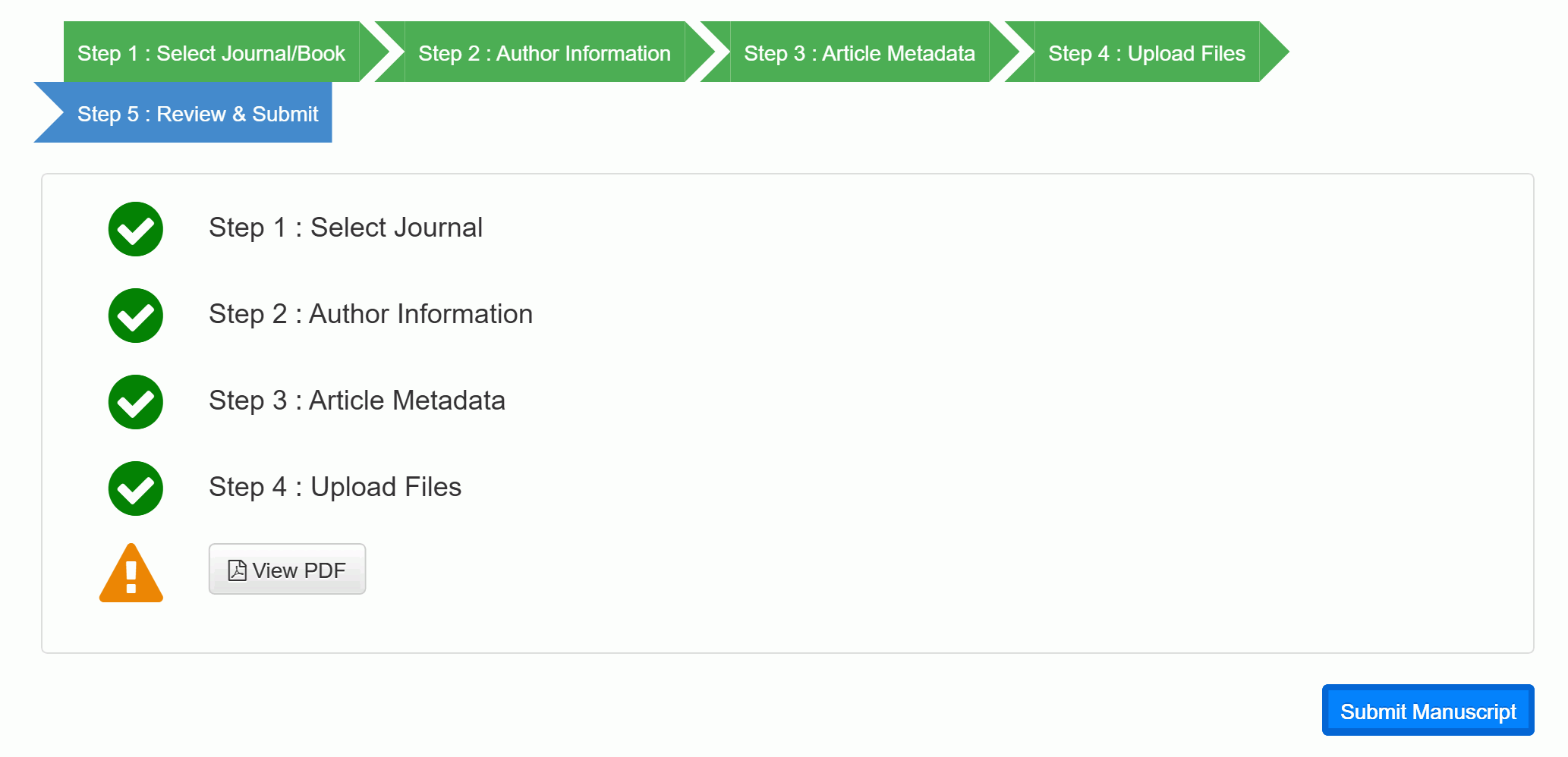
- Every step should show a green tick. A step that is not complete shows a red cross: open it and finish it.
- Click View PDF and check the whole manuscript carefully.
- Click Submit Manuscript. If the portal finds a similar manuscript from you, it asks you to confirm first.
After submission
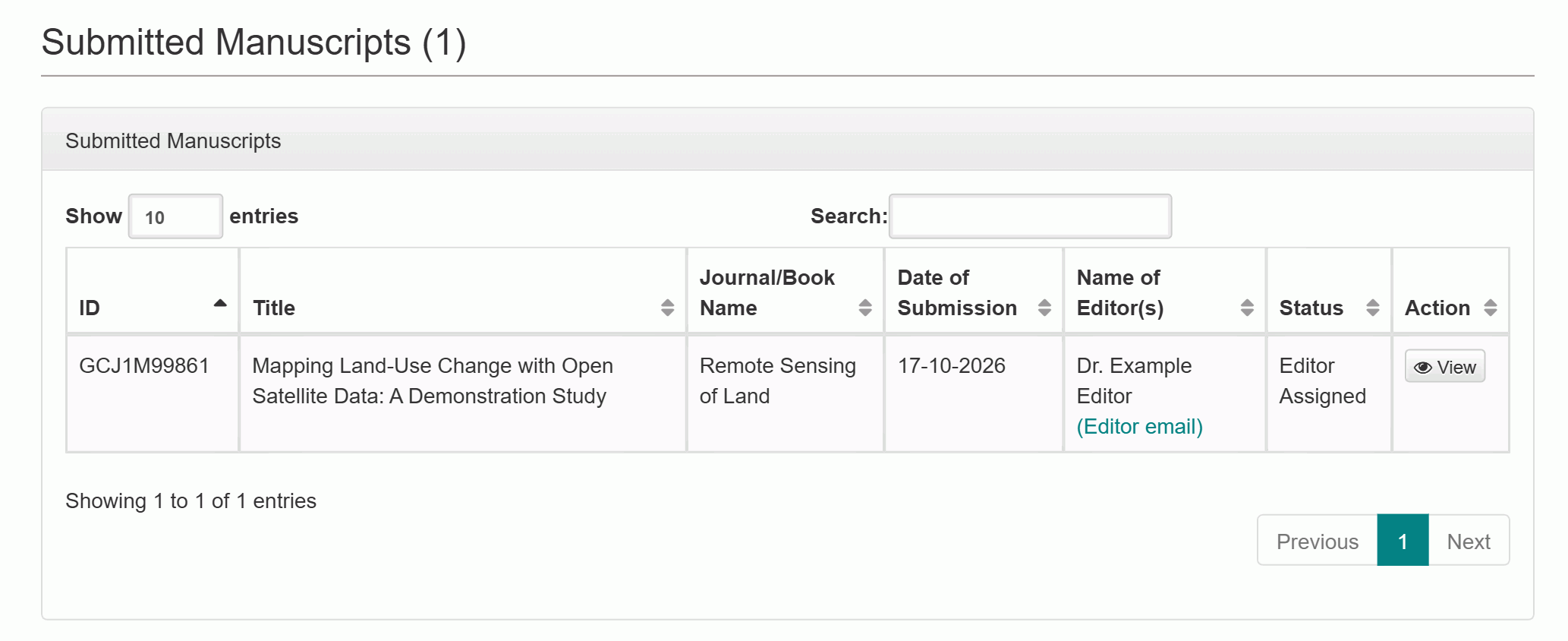
You and your co-authors receive an email with the manuscript ID (for example GCJ1M123). The manuscript then appears under Submitted Manuscript(s), with the editor and its status. Manuscript Progress shows all nine steps up to publication, with dates, and marks in red anything waiting for you.
Keep your details up to date in My Profile: affiliation, ORCID iD, photo and profile links (Fetch from ORCID fills empty boxes from your ORCID record). Your name, affiliation and ORCID iD appear on your public scholar profile once you publish.
Similarity report (Turnitin)
Every manuscript is checked with Turnitin iThenticate, which compares it with published articles, books and web pages. The editorial office runs the check; the report can then be opened only by the people working on that manuscript.
| Who | What they can do |
|---|---|
| Editorial office | Runs the check on submitted manuscripts, and again if a check fails. Only the editorial office can start a check. |
| The manuscript’s authors | Open the report from their author account — a view-only copy. |
| Its reviewers | Reviewers assigned to the manuscript open it from Active Manuscript(s) or the report form. |
| Its editors | The editor handling the manuscript and the journal’s editorial board editors open it from the manuscript’s editorial page. |
| Anyone else | Cannot open it: the button shows “no access”. Reports are never public. |
How to open it — sign in to the Manuscript Portal.
- Open Submitted Manuscript(s) and click View on your manuscript. The similarity button is at the top, next to View Manuscript and Compare versions.
- When the check is done, the button shows the score, for example Similarity Report (12%). Click it: the full report opens in a new browser tab in Turnitin’s viewer. If nothing opens, allow pop-ups for gathacognition.com and click again.
- The report highlights each matching passage and lists the source it matches. Your copy is view-only.
| The button shows | What it means |
|---|---|
| Similarity: not yet checked | The editorial office has not run the check yet. Please look again later. |
| Checking Similarity… / still running — reload later | Turnitin is comparing the manuscript. Reload the page after a few minutes. |
| Similarity Report (12%) Use filters | The check is done; the percentage is the overall similarity score. Reports checked from 7 November 2026 already use the filters below; for older ones, open the report and apply them. Use filters shows the same steps. |
| Similarity Check Failed / report unavailable | Something went wrong at Turnitin. The editorial office runs the check again; write to us if it stays like this. |
| Similarity report: no access | You are not one of the people on this manuscript, so the report cannot be shown. |
Getting the correct % of Overall Similarity: use the filters
Without filters, the overall % also counts text that is not a concern, such as the reference list and properly quoted or cited passages, so it is higher than the real figure. The correct % of Overall Similarity is the one with these filters on. Reports checked from 7 November 2026 are made with these filters already on; older reports may still show the unfiltered %.
| Filter | Why |
|---|---|
| Exclude bibliography | The reference list matches other papers that cite the same works. |
| Exclude quoted text | Text inside quotation marks is already credited to its source. |
| Exclude cited text | Passages followed by a citation to their source. |
| Abstract | The abstract often matches the authors’ own conference or preprint version. |
| Methods and Materials | Standard methods wording is repeated across many papers. |
| Exclude small matches | Short common phrases (matches of 10 words or fewer). |
- To check or apply them: open the report, click the Filters (funnel) icon, make sure the filters above are ticked (small matches: 10 words), and click Apply. The overall % at the top is then the correct % of Overall Similarity.
- Filters you change are for your own view only. If your view-only copy does not let you change them, the editor or the editorial office applies them and tells you the filtered %.
Reading your score: matches with properly quoted and cited text, common phrases, methods wording and the reference list are normal. Large passages copied without quotation and citation, from others or from your own earlier work, are not. The editor looks at the report itself, not only the number; if something is unclear, the editorial office will ask you.
Guides & policies
Need help with a submission?
Write to the editorial office.
Please quote your manuscript ID, and tell us at which step you are stuck.
+91 94216 11949 · 02424 299 094
WhatsApp +91 95118 96365
Go to the Manuscript Portal