1.Academic Affairs, International Institute for Languages and Cultures (INLAC), University of Fez, 28, Rue Haiti, Avenue Oran, Montfleuri 1, Fes 30 000, Morocco.
Investigates the impact of COVID-19 lockdown measures on the rise of domestic violence against Moroccan women.
Shows that confinement increased women’s exposure to abusers, with a significant surge in reported cases during the pandemic.
Identifies contributing factors such as financial instability, increased drug consumption, social isolation, and women’s unemployment.
Highlights the need for legislative reform tailored to the Moroccan context, an open yet conservative society, especially regarding domestic violence and family-related issues.
Suggests implementing new laws that recognize sociocultural specificities to ensure effective prevention and protection measures.
Abstract
Throughout the world, countries have gone mandatorily into lockdown to stop the spread of Coronavirus. The institutions’ efforts to save lives have put one vulnerable group of people more at risk. Moroccan women who live with domestic violence have no escape from their abusers during the pandemic, and Moroccan organizations and activists reveal that they are witnessing a huge number of reports of domestic violence. This study shows how the spread of Coronavirus, an alarming rise in partner abusers, has increased against women. Despite the efforts made by the national media channels, the Moroccan government tried to raise people’s awareness about this issue, but few measures have been taken by the government to reach out to women who were undergoing violence. For this reason, this study unravels the voices of women who suffered domestic violence during the lockdown. It also aims to examine the reasons that triggered an increase in the issue within Moroccan families. Mixed methods were used to collect our data, precisely through Google form questionnaires and focus group discussions. The aftermaths of this study demonstrate that the lockdown has led to the rise of domestic violence against Fassi women. We discussed domestic violence against women in the context of social isolation, highlighting significant factors, especially financial stability, an increase in drug consumption, and women’s unemployment. In addition to studies that demonstrate the significant increase of domestic violence in Morocco. The fact that the limited social and economic conditions and lack of services could be a limitation in this case.
Keywords
Domestic Violence , COVID-19 , Women , Moroccan NGOs , wife abuse , Fez
1 . INTRODUCTION
Times of crisis have been associated with increased disasters and violence against women. The outbreak of the COVID-19 pandemic has led to remarkable conditions that have changed almost all aspects of society. Public safety and preventive measures, including lockdowns, physical distancing, and avoiding crowds, have been widely implemented across Morocco. The phenomenon of violence against women has increased during the pandemic. As women are locked in their houses, according to the United Nations, an increased call for assistance shows that all sorts of violence against women and girls, especially domestic violence, has intensified. In this respect, Mobilizing for Rights Associates, in collaboration with local NGOs, demonstrates that violence against women during COVID-19 has increased due to the changes that happened in economic, professional, and housing situations (Mobilising for Rights Associates, 2011). This goes hand in glove with the Moroccan Association for Human Rights (AMDH) and the Democratic Association of Moroccan Women (ADFM, 2022) report, which displayed the tremendous increase in violence against women during the lockdown period. Furthermore, the quarantine becomes associated with an increase in violence against Moroccan women, including psychological, physical, sexual, and economic violence. As the Federation of Women’s Rights Association (FWRA, 2020) recorded, economic violence reached a sum of 33%, followed by physical violence, which exceeded 12 %, and sexual violence, 14%. The High Commission for Planning (HCP) reported that 3.7 million married females in Morocco (55%) endured domestic abuse by their husbands. This report revealed that the majority of women who have been victims of violence are from urban areas and aged between 18 and 30 (MHCP, 2011). This recent report showed that the prevalence of domestic violence was 55%. Organization for Economic Cooperation and Development data indicate that Morocco is among the top ten countries with the highest rates of violence against women (VAW) (OECD, 2023).
Historically speaking, violence against women led to the creation of women’s organizations, researchers, government, and international associations to seek effective strategies to prevent violence and support victims. In Morocco, there exist more than 100 listening centers to support women who are victims of domestic violence. These centers also help to raise awareness against gender-based violence.
Indeed, violence against women is a worldwide issue in which women are the target of lethal and non-lethal violence and abuse. Furthermore, domestic violence has become a highly socially visible problem and has received considerable attention in the literature by social science investigators (Feldman and Ridley, 1995). It is a pervasive phenomenon associated with a variety of adverse physical and psychological consequences. Generally speaking, the term ‘domestic’ pertains to the setting of the act within a marital or intimate cohabiting relationship in the home. The notion ‘violence’ is used because this is not usually a question of minor arguments or ‘disputes’ but refers instead to intentional, hostile, aggressive physical or psychological acts.
According to the Moroccan law no 103.13 adopted on 14 February 2018, violence against women is “any act based on gender discrimination that entails physical, psychological, sexual or economic harm to a woman” (EMR, 2018). Indeed, violence against women and gender-based violence can be used interchangeably. Correspondingly, gender- based violence encompasses but is not certainly limited to physical, visual, verbal, or sexual acts that are experienced by a woman or a girl as a threat, invasion, or assault and that have the effect of hurting her or degrading her and/or taking away her ability to control contact (intimate or otherwise) with another individual (NRC, 1996).
However, the Moroccan law legislator does not explicitly penalize marital or spousal rape. That is, despite the attention that has been paid to violence against women in recent years, studies on rape and sexual violence per se are rare. Violence against women can take multiple faces, including physical, sexual assault, verbal and emotional abuse, or rape by an intimate person or stranger. Moroccan women have experienced many forms of violence, including honor killings and circumcision. Moreover, violence against women is also signified as gender-based violence because it is associated with women’s segregation and gender inequality. For this reason, the convention on the elimination of all forms of discrimination against women (CEDAW) was ratified by Morocco to preserve women’s rights and eradicate violence against women. Within this context, violence and power relations are closely linked, and the role of the system is crucial in finding a solution to this nexus. The obtained data would help stakeholders to understand the current status and establish proper planning and implementation of national intervention programs to reduce women suffering. Accordingly, the present paper aims to investigate the traumatic experiences of violence in the lives of Moroccan women who faced various forms of domestic violence amid the lockdown. It also seeks to find the push factors behind this scenario.
This paper examines the following questions:
What are the profiles of the women on whom this study will be based?
What is the impact of the past general lockdown on the Moroccan household?
What are the reasons behind domestic violence during COVID-19 related lockdown?
What are some of the preventive measures that could have been implemented to decrease the rate of domestic violence in Moroccan households?
2 . LITERATURE REVIEW
Debates surrounding women’s rights and violence have been progressively omnipresent in the Moroccan public discussions. Women’s involvement in political protests and Arab spring uprisings has contributed to remarkable mobilization around the phenomenon of women’s rights and against violence against women. However, it is worth noting that the women’s movement in Morocco, specifically both secular and Islamic feminist groups, plays a very active role in preventing violence against women and achieving gender equality.
The political struggle of secular and Islamic feminists brought many positive changes to the reform of the mudawana, including the right to divorce and child custody, banning early marriage, and more than that, voicing out women who are facing violence. More importantly, Moroccan local NGOs have always been at the forefront of protecting and empowering women in all aspects of life (Evrard, 2014). In Morocco, recent studies indicate that some women have experienced physical violence since the age of thirteen, and others have experienced sexual violence at the same age. Most women experience violence perpetrated by someone they know, most often a current or former male partner (Ennaji and Sadiqi, 2011). Acts of violence are widespread, including deleterious impacts on physical and mental health. In Morocco, children and women exposed to violence can experience a variety of social, behavioural, emotional, and psychological problems that often remain throughout their lives. The existing academic publications also depict the underlying causes of violence against women that are rooted in ongoing social and cultural norms featured by the unequal value given to men and women. The existing research describes the degree, range, and dynamics of violence and explains why violence against women occurs. According to Ennaji, (2016), cultural traditions, illiteracy, gender inequalities, and misogynist hadiths are among the major reasons behind violence against women. In her article, “Gender-based Violence in Morocco: Domestic Violence as a Case in Point”, Hayat Naciri discussed how domestic violence disempowers women from different angles, including economic, legal, and social dimensions. According to her, the increase in violence against women is due to the cultural beliefs and norms that trivialize women’s role in Moroccan society (Naciri, 2018). According to Skalli, (2001) “Most women become economically dependent after divorce and widowhood, especially if they did not have a paid job prior to this change in their marital status. Nearly four out of ten women return to their parents’ home after divorce, more out of financial dependence than personal choice.” Illiteracy and poverty are two of the major reasons behind violence and the disempowerment of women in the Arab world (Skalli, 2001). Douki argues that “in Arab and Islamic countries, domestic violence is not yet considered a major concern despite its increasing frequency and serious consequences. […] religious justifications, plus the importance of preserving the honor of the family, lead abusers, victims, police, and health care professionals to join in a conspiracy of silence rather than disclosing these offences (Douki et al., 2003). In line with this, according to Boughima, the attacher is always from low/medium educational and economic level, and essentially has toxic habits. They also associated the factors behind violence with the psychological and emotional effects on women (Boughima et al., 2018). However, many women do not report abuse of any kind because of the belief, based on common misinterpretations of the Quran, that it is justified (Bouhout, 2020). Further, through her research on gender-based violence in Morocco, she recognizes this belief that violence is necessary and justified as rooted in the view that women are men’s property. In a patriarchal society, women are abided by the rules of culture and religious constraints, which hinder their ability to report violence or abuse (Kisa et al., 2021). In Morocco, if a woman seeks legal recourse against her husband, she is going against two essential social norms: family privacy and male primacy (Cochran, 2009).
Domestic violence has been a local and global hidden disease during COVID-19. It has affected all aspects of life, including gender roles, in different ways. Significantly, ‘pandemics make existing gender inequalities for women and girls worse, and can impact how they receive treatment and care’ (UNPF, 2020). The increase in calls of domestic violence against women has alerted several NGOs and activists. By using social media, they expressed their concern and affirmed the need to establish effective interventions to prevent and combat the phenomenon. Media plays a major role in shaping public opinion (Carll, 2003). The way news is promoted affects individuals’ way of thinking and behaviours. Besides, women are the most targeted victims of domestic violence in Morocco, including sexual harassment, rape, and battering. However, women rarely call authorities for help. Many reasons prevent women from reporting violence.
The most important of these are traditional beliefs regarding the subordination of women; the cultural negative perceptions towards a woman who complains about her husband, brother, or father, ignorance and poverty, the difficulty of proving being violated. These reasons make domestic violence tolerable and also frequent and impune. On that account, because of the social construction of masculinity, the path to preventing violence against women is laborious and competitive. Therefore, this study aims to investigate the trends of VAW in Morocco, including its forms and factors, contexts in which it occurs, and the socio-demographic characteristics of victims.
3 . METHODOLOGY
Having delimited the contours of our paper and contextualized the basic concept, we now embark on the practical aspect of this work. This practical aspect encompasses the methods applied, the findings, and an analysis of those findings. To conduct a prospective study on women victims of domestic violence, the current paper follows an exploratory mixed-methods design. We opted for such methods because the issue of violence during the previous lockdown is still relatively new, which demands more exploration. The data were collected in a Microsoft Excel table.
Oral and written consent was obtained from each of the people who took part in this paper before their inclusion. Furthermore, respondents in the focus group were given pseudonyms to protect their identity. The results are not to be generalized due to the low number of respondents available and also due to the difficulty of reaching women who were victims of domestic violence, since the topic is taboo within Moroccan families. One hundred eleven online female respondents were reached through a Facebook group called ‘Women’s Association against Violence’ with over 400 members. The group aims to provide legal-related questions and enquiries. It is an online feminist non-governmental organization that offers a space for women to discuss issues of violence. Two focus groups, each consisting of four participants, were conducted via WhatsApp groups. To enable discussion between participants, I set up online groups. Participants were a part of young people between 18 and 42. The first focus group consists of four women who were the victims of domestic violence during the period of lockdown. The other focus group has consisted of four male participants to provide our research with a counter-voice and discuss the issue of domestic violence from male perspective.
Table 1. Demographic characteristics of Informants.
City
Interview Medium
Marital Status
Parental Status
Educational Level
Achora Fes
Married
Mother
Primary
Fatna Fes
WhatsApp
Married
Mother
Illiterate
Halima Fes
Single
Secondary
Mounia Fes
Single
Primary
Regarding the research problem, violence against women has seen a rise in the past couple of years due to the growing gaps in the Moroccan fabric as a result of Moroccan women gaining more rights and becoming equal with their male counterparts, while men are still influenced by some archaic ideas that are social norms and beliefs which dominated in the past mm, which maintain their dominance over the other gender. The current research endeavors to measure the impact of this sociological change during the period of lockdown. The questionnaire consisted of open-ended and closed-ended questions to measure both frequencies and gain insights into the informants’ attitudes towards the issue of domestic violence. This constitutes the core content of focus group discussions as another instrumental tool in our data collection process. Socio-demographic characteristics of participants such as age, sex, and marital status were also collected and designed in the following table. Analysis of the data was performed using coding methods, which are known for their ability to provide deep insights into vast amounts of information.
4 . RESULTS AND ANALYSIS
Many studies have been conducted on the issue of domestic violence against women, but few measures have been taken by the authorities to prevent it. For this reason, amid the COVID-19 pandemic, as women become trapped in their houses, a large number of Moroccan women reported being violated by their perpetrators. In this section, we present our findings.
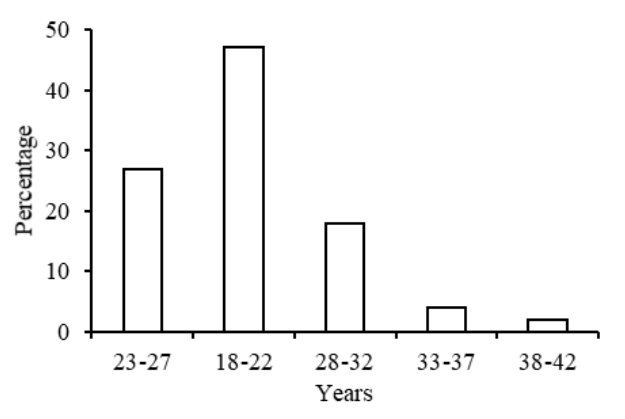
Here, we logged information regarding respondents’ sociodemographic characteristics related to age and educational level (Figure 1).
In the survey, out of 111 respondents, 27% were aged between 18 and 22, 47 % were between 23 and 27, 18 % were between 28 and 32, and only 6% were between 33 and 42. This indicates that the largest category responding to our research is aged between 22 and 32. It was noted that at least 27% of informants have two children, and 20% of them had a professional engagement (Figure 1).
Figure 1. Respondents’ Age
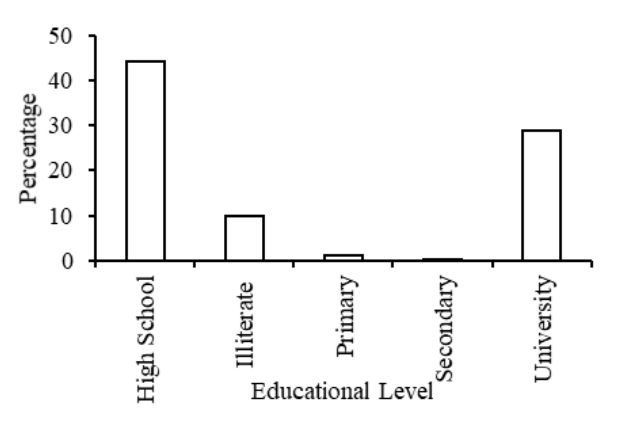
Figure 2. Participants’ Educational Level
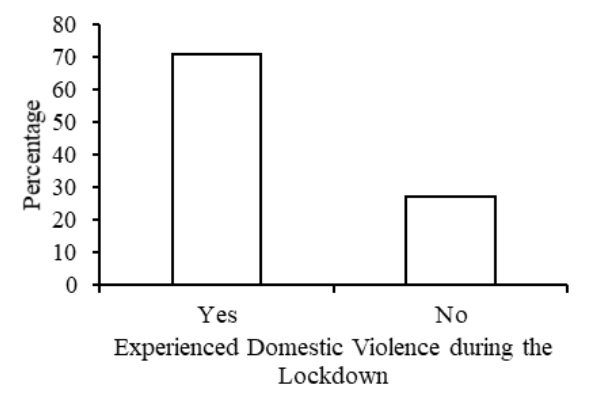
Figure 3. Respondents who Experienced Domestic Violence during the Lockdown
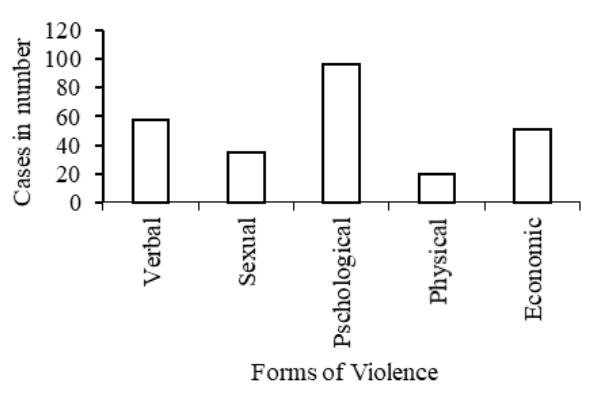
Figure 4. Forms of Violence Participants Experienced during the Lockdown
The above figure describes the educational backgrounds of each informant. Since domestic violence could differ between educated and illiterate women, we decided to ask our respondents about their educational level. The highest number of participants (44.14%) have attended high school, and (28.82%) indicate they attended university level, whereas (9.90%) are illiterate, (13.51%) have received a secondary degree, and 1% have attended primary level (Figure 2). Surprisingly, the majority of women who were victims of domestic violence are educated and hold high positions due to the sociocultural context that puts pressure on them and saves their marriage and their unity with their children. In contrast to other studies which associate women victims of violence with a lack of financial stability and a lack of education (Follingstad and Rogers, 2012; Lenze and Klasen, 2017), the findings reveal that educated women are exposed more to violence due to the fact that partners compensate for the loss of their traditional authority and Qiwamah. Sometimes, they decide to stay in a toxic, abusive relationship because they believe it is a public shame if they get a divorce, as in the case of one of the participants named Sara. She demonstrates this perception by saying that “It is pointless for me to carry on my studies and get divorced with a kid. It is a complete failure.” It is assumed that sociocultural context is more powerful sometimes than the work status or educational level of women.
The COVID-19 pandemic has resulted in an increase in domestic violence around the world since all countries imposed social isolation and lockdowns. Recently, Moroccan NGOs reported increases in violence against women due to the lockdown. Compared to the previous year (2017), the Moroccan Federation of Women’s Rights indicates that gender-based violence increased by 31%. In line with this result, our study shows that 71% of respondents have experienced domestic violence, whereas 27% have not faced any kind of violence (Figure 3). Additionally, our interviewees’ experiences and dissatisfaction with domestic violence are reflected in the discussion below, which took place during the focus group discussion.
Extract one:
Moderator: ‘Have you experienced any kind of violence during lockdown?’ What kind of violence?
Laila: I was always abused by my husband; he used to hit me so badly. But, amid the CORONA pandemic, he started hitting me more and more”
Fatna: “Yes, we have fought three times during the lockdown. He hit and slapped my face because I didn’t fulfill all that he demanded.”
Halima: My father threatens to kill me! He always insults me and calls me “whore”. One day, during the first days of lockdown, he attacked me and put his hands around my neck, asking me to give him money I had gained when I was working in Tangier.”
Mounia: “This is not a father”. He is like my criminal brother; he uses abusive, hurtful words when he is angry with me. I can’t even say those dirty words.”
Halima: “He is a greedy person. I used to give him money, but we stopped working due to COVID.”
Achora: “My husband grows very suspicious and jealous. Even though he spends the whole day at home, he acts as if I am doing something wrong and he is trying to find out. He does not allow me to go out or even look through the window. But what pissed me off is his daily pressure on me to do anal sex. I refused many times, but he forced me and did it.”
Mounia: “He doesn’t know that it is haram (prohibited)”
Moderator: Sorry, you had to go through all this. Have you ever reported being violated to the police by any NGO?
Halima: “No, I just called my father-in-law and he made him apologize.”
Fatna: No, I escaped home and spent three days with my family. Then, he was just sorry and begged me to return home.”
Achora: “We are getting divorced soon; I made a medical certificate of being physically injured and gave it to the lawyer. I need an NGO to help me, but I don’t know any”
Mounia: “No, but my poor mother always defends me.”
These women have experienced domestic abuse that was committed by their husbands, fathers, and brothers. As they demonstrate, perpetrators become more violent under the influence of social isolation. They have been victims of three forms of domestic violence: physical violence, verbal violence, and sexual violence. The result of domestic violence is the dehumanization and devaluation of women, which leads to divorce, health problems, and psychological problems. They lose their sense of security and become scared of their closest people.
To justify what sorts of domestic violence women faced during the quarantine, respondents were required to provide us with all the forms they experienced. Of the 111 women, 22.30% have had verbal abuse by a partner, 13.46% were sexually violated, 36.92% have had psychological abuse, 7.69% were physically violated, and 19.61% have been economically abused (Figure 4). The result also indicates that 10% of these victims had to flee their homes during the pandemic. While it is commonly assumed that marriage has its “ups” and “downs,” some participants believed that the “downs” of marital life occur when they are physically violated. Women stated that their husbands’ aggressive behaviors fueled their determination to promote themselves. Despite their different perspectives, the majority of participants made the same decision to stay rather than get divorced. In 41 cases, the victim had no reaction against the attacker; 21 had a medical certificate without judicial follow-up, and 13 were divorced. Some participants reported that the abuse was repeated during the lockdown due to the low income of their partners, drugs, and depression.
Table 2. Family Members Committed Violence Against Women
Family Members
Violence Against Women (%)
Husband
76.13%
Father or Mother
7.95%
Family Member
12.5%
Brother or Sister
1.13%
Out of the total victims, only 5% reported being violated by the authorities, and 70% did not report being victims of domestic violence. There was a significant nexus between age and violence. Respondents who were abused are young (23-27). The majority of them are living with their husbands.
Through these findings, we can conclude that there are a variety of reasons behind that contribute in the rise of domestic violence. Under these influences, including economic, social, and drug influences, men become violent and aggressive towards their partners. All of these forms of violence directly affect their children as well and put them in danger. The perceptions of male legitimacy to violence in our culture and the belief that men have the right to physical violence. The masculine mentality (Douki et al., 2003) holds that male supremacy is natural and that control of women is essential.
This study also includes males’ perspectives towards violence against women. Through a focus group of four, they highlight the main reasons behind domestic abuse.
Extract two:
Moderator: “Why do some men use violence against women?”
Ahmed: “Maybe because they are drug addicts or alcohol addicted.”
Abdelaali: “Yes, I do agree with you. There are also other reasons such as jealousy, lack of communication, and wife disobedience.”
Mohammed: “True, and there are some men who believe that battering a wife is a duty or a way to express love and jealousy.”
Group: [Laughter]
Hamza: “Men who are always stressed and psychologically unstable. There are some men who literally cannot control themselves when they are angry”.
The rising number of domestic violence victims is due to these reasons mentioned by our respondents, such as drug and alcohol addiction, lack of communication, wife disobedience, lack of self-control, and jealousy. Throughout our discussion, interviewees also mentioned that when ‘men have low income and meet with a demanding wife, a relationship may turn into violence’. Victims of domestic violence face challenges due to their low socioeconomic status and the unavailability of organizations in the region. This fact is particularly critical as there is only one women’s shelter in the Fes-Meknes region. These factors are a first step that helps us better understand this issue and develop suggestions to end domestic violence.
Table 3. Attitudes of respondents regarding violence against women
Violence against women is often provoked by the victim (%)
Domestic violence is a private matter and should be handled within the family (%)
Women are more likely to be abused by someone they know than a stranger (%)
Totally agree
35
21
49
Partially agree
34
21
36
Disagree
25
24
3
Strongly Disagree
6
34
12
Table 4. Among the significant reasons behind the increase in domestic violence during the pandemic
Reasons behind the increase in Domestic violence
Domestic violence (%)
Job Loss and Unemployment
40
Boredom
03
Drug addiction
23
Psychological and Financial Pressure
15
The Absent Dialogue
8
Ignorance and Fear
6
5 . DISCUSSION
In this paper, we examined the occurrence of several interrelated factors with domestic violence in Morocco during the COVID-19 pandemic lockdown. In Morocco, previous studies regarding domestic violence against women before the onset of COVID-19 proved that 33.9 % of women were facing physical abuse and 38% were undergoing psychological and verbal abuse (Sadiqi, 2010). These findings show that both physical and psychological abuse have increased since the initiation of lockdown measures in Morocco. Social challenges and expectations for the sake of family reputation and children’s safety (Douki et al., 2003). There is currently no effective implementation by authorities to punish perpetrators and protect the victims of domestic violence. In addition to the reasons listed above by our respondents and interviewees regarding domestic violence, social and cultural norms, women who are not financially independent, marriage failure, and fear of public shame are among the most vulnerable categories of women to fall prey to domestic abuse. Our study reveals that the majority of women experienced physical, verbal, psychological, and sexual violence. These findings, specifically, show that both physical and psychological abuse have increased since the initiation of lockdown measures in Morocco. Women who reported being abused also highlighted more gender inequalities, beliefs, and attitudes. We can conclude that men with a patriarchal mindset are more likely to be abusers. The fact that women are economically dependent on men as providers for their families is another major cause of violence. According to Skalli, (2001), “Most women become economically dependent after divorce and widowhood, especially if they did not have a paid job prior to this change in their marital status.
However, the number of women who report the violence they suffer from is rare; and that is due to their lack of awareness of women’s rights, fear of not receiving any legal justice, and also because they think it is the norm, as reporting may bring shame to the family. The state, indeed, deters women victims from seeking their authority because the protection they provide is insufficient. This result aligns with studies that have also shown an increase in abuse reports in other countries, such as Spain, Italy, Brazil, France, the United Kingdom, and China (Bradbury-Jones and Isham, 2020; Campbell, 2020). Based on the Shreeves, (2022), there are similarities between the European countries during COVID-19 when it comes to domestic violence, as they noticed a rise in the number of female victims. Research “conducted for the European Parliament and EIGE's analysis of the impacts of the pandemic on intimate partner violence, which examined the available data, concluded that the pandemic and the lockdown measures led to an increase in the prevalence and intensity of violence against women”. (Shreeves, 2022). In September 2019, data obtained by the BBC from 43 police forces across the United Kingdom showed that murders as a result of domestic violence were at a 5-year high (BBC, 2019). In all cases, reports to the police decreased, except through an online survey in which women shared their experiences of domestic violence. Like Moroccans, women from these countries also have undergone physical conflict, forced to have sex with their partners, and threatened with staying at home.
Further, violence against women has been confirmed by our fieldwork as for the large percentage of females who have undergone violence in many forms and shapes, some merely verbal, while others have found themselves stuck in a life-threatening situation with a spouse or a family member who has far exceeded verbal violence to reach physical, sexual, or even financial abuse. This violence is associated with emotional abuse in 40%. In our study, domestic violence began in more than two weeks of the cases early during the lockdown. Our paper’s primary goal is to decipher and unravel the mystery of violence against women, as it remains a less-spoken-about issue that needs to be voiced out and recognized by the authorities. The women who had filled in the questionnaires listed some of the reasons behind their husbands’ violent acts during the lockdown.
Our research also demonstrates that a man’s employment is associated with less physical abuse. Henceforth, one of the respondents said that joblessness and boredom were the major reasons behind her husband’s furious acts; she added that ‘accumulated family issues and the pressure to provide for the family’s daily needs had the greatest impact on her relationship with her husband’. While another woman claimed that ‘drugs, jealousy, and economic crisis are solid factors that will certainly make any husband as violent as hers’, then she goes further to state that ‘we need to normalize privacy in the household, call for mutual respect between the couples and also act communicatively instead of physically.
This may reflect novel attitudes behind the increase in domestic violence during the pandemic. Importantly, the media must pay closer attention to this category and raise public awareness. In addition, some of the preventive measures repeatedly stated in the questionnaire focus on, first, the role of education and how we should educate our children, teaching them how society functions and how all genders should be treated equally. Again, another participant argued that we should legislate and implement new laws that take into consideration the peculiarities of the Moroccan society as an open, yet conservative society when speaking about family issues and domestic violence. In the same line of thought, some of them believed that associations should not only stop at helping each case individually, but instead, they have to be more involved in all that is related to law and legislation. Indeed, there should be some collaboration between the authority and civil society. Both should help spread awareness and sensitize people to the growing need for a peaceful community, allowing children to grow and prosper. Based on this study, low income was also associated with all types of violence. It comes out that domestic violence affects younger women, from both low and high socioeconomic and educational levels, in their marital home with their spouse. From these findings, we can say that even a loving commitment before marriage does not protect women experiencing violence from their spouse.
The fact that violence causes psychological problems means that the mental health of women victims should be given more importance than what they enjoy at the present moment, as indicated by the study of Boughima (2018). For that reason, access to psychologists should be equal for all social classes in the community. Participants have expressed their concern regarding the legislative measures and the lack of implementation.
To address this issue, in their book “Gender and Violence in the Middle East”, Enaji and Sadiqi (2011) suggest that there should be a process of deconstructing social and cultural norms that violate women in the name of Islam and constructing a new culture that promotes gender equality and peace between the genders.11 Women also need to know all the information related to domestic violence and their rights, and increase their chances of employment.
6 . CONCLUSION
This study focused exclusively on the study of women victim of domestic violence, and the association between violence with some essential factors. Overall, the paper concludes that given the increases in physical, psychological, verbal, and sexual violence among Moroccan women, this phenomenon of domestic violence should be treated as a main public crime against women. In our study, women victims of violence expect active measures to prevent it and provide them with health care. All evidence suggests that not enough is being done practically and in law to protect women from DVA.
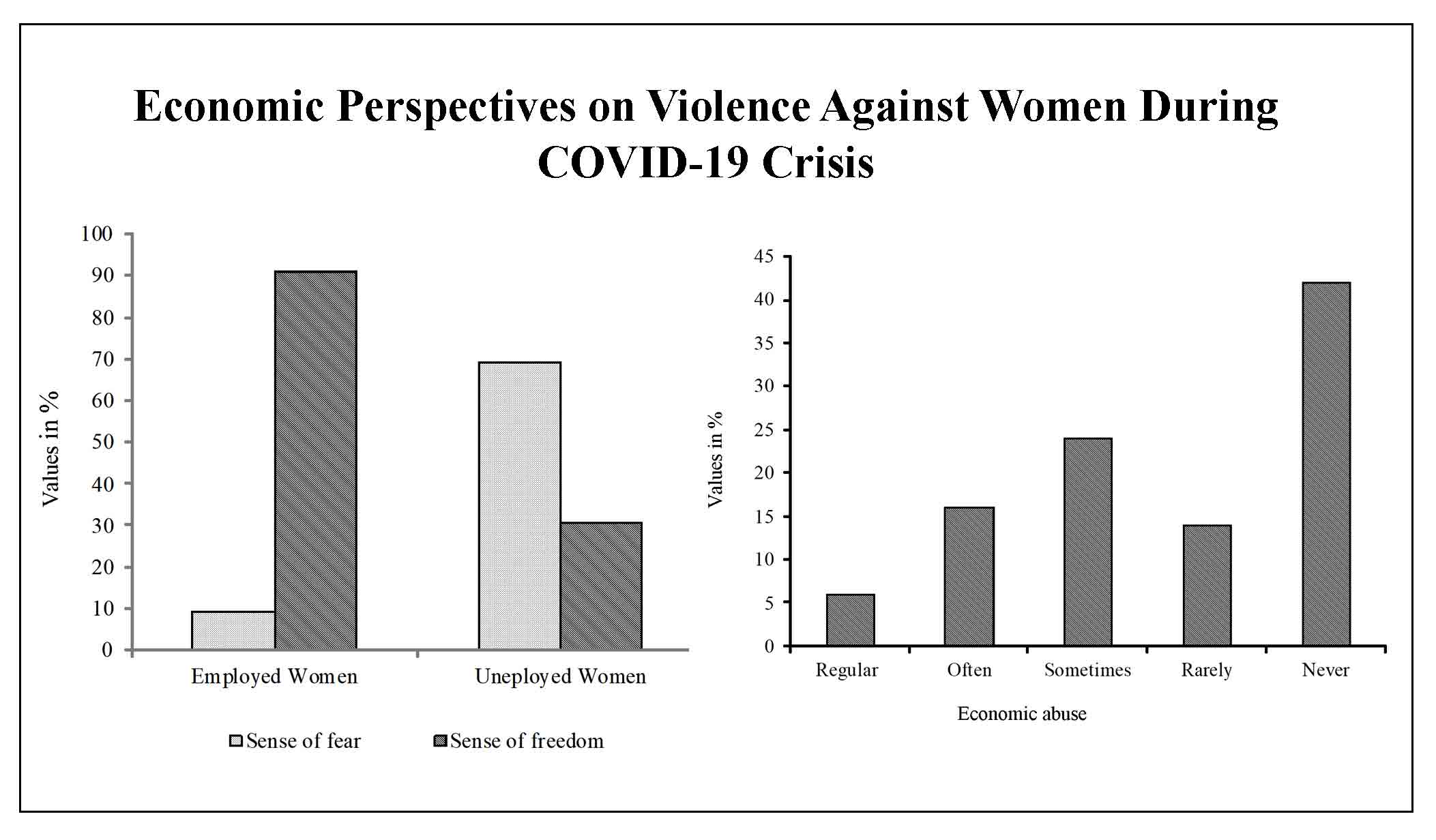
In addition, women’s ability to leave their abusers is complicated, as divorce is still socially not accepted, and the preservation of the family is highly valued. The results show that 45% of unemployed women choose to stay with abusive partners due to financial dependence and fear of any physical harm that may be caused to them or their kids. Our findings coordinate with the previous studies that turn domestic violence into a public concern. Therefore, health sectors are required to put the victims in contact with authorities, and raise awareness through social media, visual, and printed media to reach all women's categories in all areas of society. This crime will be, thus, diminished when all of the authorities challenge gender attitudes that promote cultural violence. Actions might also involve serious empowerment of both governmental and non-governmental associations that help and promote safety for victims of domestic violence. Political crises and socioeconomic instability aggravated the gender inequalities created by the social and cultural structures and systems, and the COVID crisis brought in a new issue of investigation.
The fieldwork results have provided the opportunity to witness how COVID-19 has exposed structural gender and social inequalities. As intersectionality theory predicts, the epidemic has hit hard poor and unprivileged women and all those who are among the most marginalized demographic intersections: rural, single, divorced or widowed, and working-class people. Poor women are less likely to have access to social security and protection. Covid 19 has had a disproportionate impact on this underprivileged category, and women’s organizations have issued ominous warnings about the pandemic’s disastrous conditions in poor rural communities. The study has revealed that women and other marginalized groups bear the harshest and most unbearable brunt of COVID-19, which has aggravated structural social injustice and inequality at the intersections of gender, status, class, in addition to occupation.
This will have a negative impact on women’s participation in development and on diversity that is crucial in politics and in society as a whole. Based on this scenario, the country needs reforms of its existing laws and the development of new policies to achieve ideal gender parity in public life.
Tables
Figures
Conflict of Interest
The authors declare no competing interests
Acknowledgements
The author expresses special thanks and gratitude to the reviewers and editors for their rigorous reviews and valuable suggestions for improving the draft.
Abbreviations
ADFM: Democratic Association of Moroccan Women; AMDH: Moroccan Association for Human Rights; CEDAW: Elimination of All Forms of Discrimination against Women; MHCP: Moroccan Haut Commissaire au Plan; MRA: Mobalising for Rights Associates; OECD: Organisation for Economic Co-operation and Development.
Bradbury-Jones, C., Isham, L., 2020. The pandemic paradox: The consequences of COVID-19 on domestic violence. J Clin Nurs. 13-14, 2047-2049.
5.
Campbell, A. M., 2020. An increasing risk of family violence during the Covid-19 pandemic: Strengthening community collaborations to save lives. Forensic Sci Int Rep.
Cochran, C., 2009. Women and the Law in Islamic Societies: Legal Responses to Domestic Violence in Saudi Arabia and Morocco. The Fletcher School Online Journal on Southwest Asia and Islamic Civilization, 1-11.
8.
Douki, S., Nacef, F., Belhadj, A., Bouasker, A. and Ghachem, R., 2003. Violence Against Women in Arab and Islamic Countries. Archives of Women’s Mental Health, 6(3), 165-171.
Feldman, C. M. and Ridley, C. A., 1995. The etiology and treatment of domestic violence between adult partners. Clinical Psychology: Science and Practice, 2(4), 317-348.
MHCP [Moroccan Haut Commissaire au Plan], 2011. Principaux résultats de l’Enquête Nationale sur la Prévalence de la Violence à l’Egard des Femmes (version française).
18.
MRA [Mobalising for Rights Associates], 2011. The Impact of COVID-19 on Violence Against Women in Morocco.


 ,
Souad Slaoui 2
,
Souad Slaoui 2