
Journal Open access Double-blind peer review
Journal of Geographical Studies
In association with the Department of Geography, Jamia Millia Islamia (A Central University), New Delhi
'Journal of Geographical Studies' (JGS) publishes double-blind peer-reviewed articles within all fields of geography.
Editor-in-Chief Professor. Masood Ahsan Siddiqui (Department of Geography, Jamia Millia Islamia – A Central University, New Delhi-110025 (India).)
Managing Editor Dr. Kalpana Bhagat  (Gatha Cognition.)
- Articles published
- 59
- Crossref citations
- 277
- Citation ratio · Crossref
- 4.69
- Citation ratio · OpenAlex
- 7.37
- Days to first decision
- 124
Citation ratio = citations ÷ all articles published since the first issue. Days to first decision = median days from submission to the editor’s first decision, for the last 20 manuscripts (submitted since April 2023).
Issue
Volume 1 (2017) · Issue 1
Editorial

Original Research Paper
-
pp. 3-10 Open access
Modeling Surface Soil Moisture from Microwave Remote Sensing Data in Solani River Catchment Uttarakhand India
The spatiotemporal variation of surface soil moisture is a key subject variable need to be assessed accurately since it plays a crucial role in partitioning of rainfall into runoff and infiltration. Active microwave remote sensing has offered prominent potential towards accurate estimation of surface soil moisture. Present study utilizes ERS-2 SAR image for estimating surface soil moisture by incorporating the effect…
10.21523/gcj5.17010101 1,798 views 7 Jul 2017
-
pp. 11-25 Open access
Assessment of Water Footprint in Selected Crops: A State Level Appraisal
Every commodity or goods has intake of water i.e. either in processing or furnished stage. Thus, the present study propensities macro-level (states-level) water footprint (WFP) assessment of selected eight crops namely, Wheat, Barley, Maize, Millets, Rice, Sorghum, Soybeans and Tea. The aim of present research is to assess water use in selected crops at field level. In addition, the spatial evaluation at state level…
10.21523/gcj5.17010102 2,687 views 8 citations 6 Oct 2017
-
pp. 26-36 Open access
Beyond the Brothels: A Qualitative Study of the Destitute Female Sex Workers of Central Delhi Red Light Area
Anushree Nagpal, Atiqua Tajdar, Masood Ahsan Siddiqui, Mohammad Hassan, Suman Gaur, Mohammad Hashim
The term ‘sex workers’ refers to those involved in prostitution. This particular term is preferred as it does not have the derogatory, sexist connotation that the term ‘prostitute’ has. Belonging to a highly stigmatized profession with no financial and familial support forthcoming, the latter years of the lives of destitute female sex workers are spent in abject misery and poverty. Effort has been made to study the s…
10.21523/gcj5.17010103 4,251 views 2 citations 6 Nov 2017
-
pp. 37-45 Open access
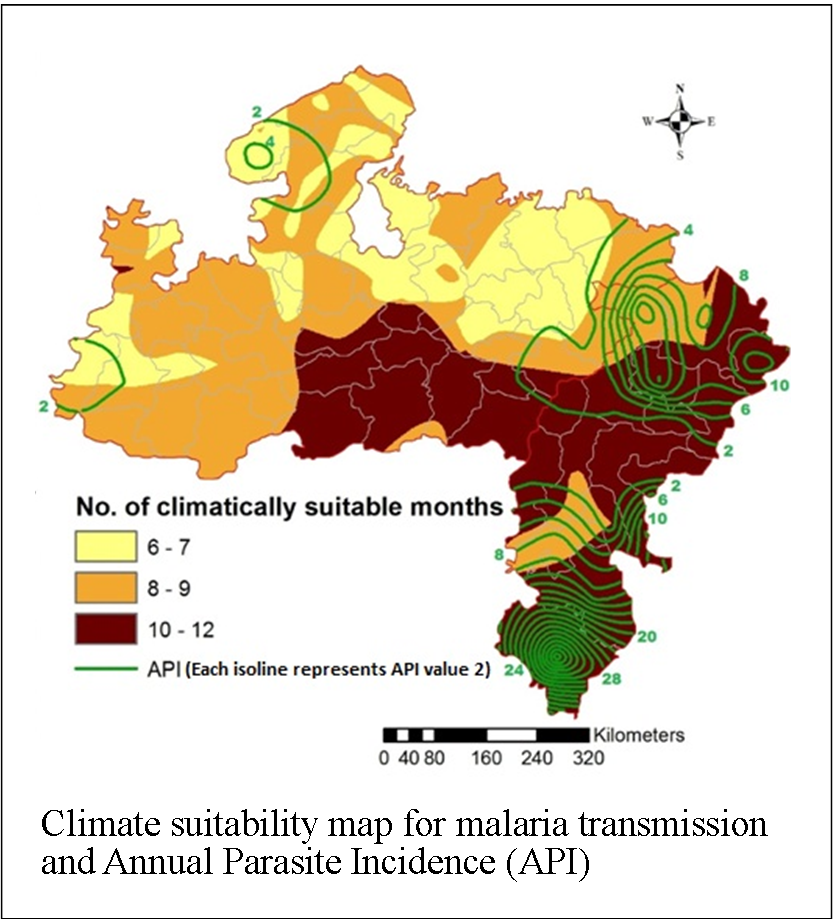
Geospatial Suitability Mapping of Climate-based Disease Transmission using Fuzzy Logic for Central India
Seema Mehra Parihar, Soma Sarkar, Premendra Kumar
Geographic Information System (GIS) today supports health and disease mapping in diverse ways. Present study divulges geographic dimensions of malaria disease in Madhya Pradesh and Chhattisgarh states located in Central India. Chhattisgarh is second and Madhya Pradesh is the third most malarious states after Odisha in India. In the present study, an attempt is made to map climate-based malaria transmission suitabilit…
10.21523/gcj5.17010104 971 views 7 Dec 2017
-
pp. 46-55 Open access
Effect of Wastewater on the Soil and Irrigation Process: A Laboratory Study
Athar Hussain, Manjeeta Priyadarshi, Saif Said, Suraj Negi
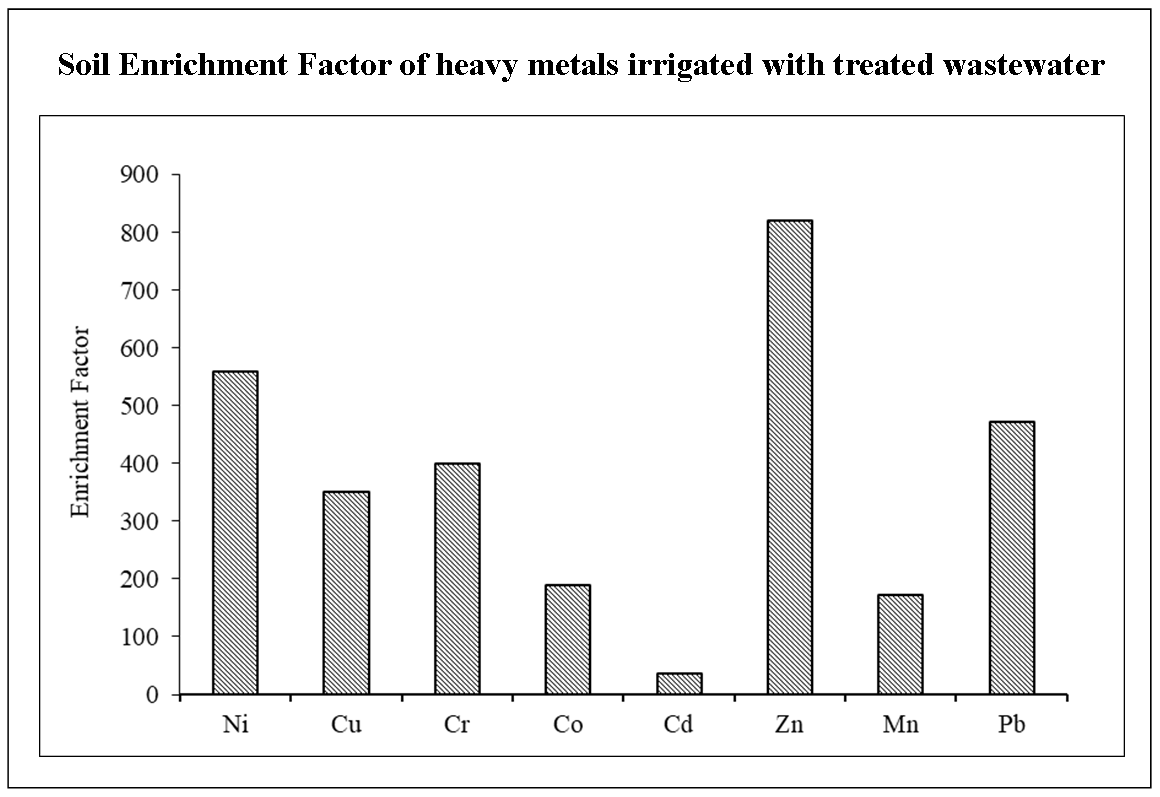
Most of the industrial sewage effluents used for irrigation contains heavy metals which cause toxicity to crop plants as the soils are able to accumulate heavy metal for many years. The vegetables grown for the present study were irrigated with treated wastewater brought from a nearby full-scale sewage treatment plant at different compositions along with tap water as a control. The concentration levels of the Cd, Co,…
10.21523/gcj5.17010105 1,159 views 10 citations 20 Dec 2017

Credits to reviewers (52)
- Dr. Vijay Bhagat, Post-graduate Research Centre in Geography, Agasti Arts, Commerce and Dadasaheb Rupwate Science College, Akole-422601, Ahmednagar, Maharashtra (India).
- Dr. Suyash Kumar, Geology Department, Govt. PG Science College, Gwalior, MP 474009 India.
- Dr. Nitin Mundhe, Post Graduate Teaching & Research Centre, Department of Geography, S. P. College, Pune
- Dr. Archana Patil, RNC Arts, JDB Commerce and NSC Science College, Nashik Road, India
- Dr. Ravindra Medhe, Department of Geography, Savitribai Phule Pune University, Pune
- Dr. Chaitanya Pande, All India coordinate research project for dry land agriculture, Dr. Panjabrao Deshmukh Krishi Vidyapeeth, Akola
- Dr. BHAVANA Umrikar, Department of Geology, Savitribai Phule Pune University, Pune - 411 007 (India).
- Dr. Sanjay Kale, Department of Environmental Sciences, University of Pune, Pune- 411 007.
- Dr. Driss Bouyahya, Moulay Ismail University, Meknès Morocco School of Arts and Humanities
- Dr. Sainath Aher, Post Graduate Department of Geography, S. N. Arts, D. J. Malpani Commerceand B.N. Sarda Science College, Sangamner 422 605, India
- Dr. Mohammad Suhail, AS College, Lakhaoti, BSR, CCS University, Meerut, Uttar Pradesh (India).
- Professor. Shahida Murtaza, Deartment of Women Education,Maulana Azad National Urdu University,Gacchibowli,Hyderabad. 5000032Telengana.India.
- Dr. Taruna Bansal, Department of Geography, Jamia Millia Islamia - A Central University, New Delhi-110025 (India).
- Prof. Lubna Siddiqui, Department of Geography, Jamia Millia Islamia, New Delhi-110025 (India).
- Dr. Saif Said, Department of Civil Engineering, Z. H. College of Engineering and Technology, Aligarh Muslim University (AMU), Aligarh U.P. (India).
- Professor. Shahab Fazal, Department of Geography, Aligarh Muslim University, Aligarh, UP
- Dr. Ananad Malik, Swami Sharadhanand College, Delhi University
- Dr. Firdous Azmat Siddiqui, Sarojini Naidu Centre for Women's Studies, Jamia Millia Islamia, New Delhi
- Mr. Gajendra Singh Yadav, AFC
- Professor. Mohd. Firoz Khan, Department of Geography, JMI, New Delhi
- Dr. Raihan Ahmed, Department of Geography, Jamia Millia Islamia, New Delhi
- Professor. Somnath Dasgupta, Chair Professor, Department of Geography, Jamia Millia Islamia, New Delhi
- Dr. Abhay Kumar, Lokashraya Foundation, A-101, Gauri Sadan, 5-Hailey Road, New Delhi-110001
- Dr. R Islam, Wadia Institute of Himalayan Geology
- Dr. Ajaykumar Kadam, Department of Geology, Savitribai Phule Pune University, Pune
- Professor. Nizamuddin Khan, Department of Geography, AMU Aligarh
- Professor. Abdul Muneer, AMU Aligarh
- Dr. Rajasekhar M, Department of Geology, Yogi Vemana University, Kadapa-516003, Andhra Pradesh (India).
- Dr. Rahul Todmal, VP's ASC College Baramati, Pune (Maharashtra)
- Dr. K. V. Suryabhagavan, School of Earth Sciences, Addis Ababa University, P.O. Box 1176, Addis Ababa, Ethiopia.
- Prof. Syed Ahmad Ali, Department of Geology, AMU Aligarh
- Dr. SHANKAR KARUPPANNAN, Department of Aplied Geology,School of Applied Natural Sciences (SoANS), Adama Science & Technology University, Adama, Ethiopia.
- Dr. Nanabhau Kudnar, C. J. Patel College Tirora, Gondia
- Mr. Sumit Das, Savitribai Phule Pune University, Pune
- Dr. Arun Magar, Department of Geography, Tuljaram Chaturchand College of Arts, Science and Commerce College, Vivekanand Nagar, Baramati- 413102,Maharashtra (India).
- Dr. Santosh Bhailume, Department of Geography, K.V.N. Naik College Nashik
- Prof. Biplab Biswas, Department of Geography, Bardawan University, West Bengal
- Miss. Abhra Singh, Jamia Millia Islamia, New Delhi
- Professor. Mamdouh El-Hattab, Institute of Environmental Studies and Research, University of Sadat City, Egypt.
- Dr. Yogesh Badhe, Department of Geography, Savitribai Phule Pune University, Pune - 411 007 (India).
- Dr. Sagar Mali, Department of Geography,Vidya Prabodhini College of Commerce, Education, Computer and Management, Vidyanagar, Alto-Parvari-Goa.
- Dr. Murugesan Bagyaraj, Department of Geology, College of Natural and Computational Sciences, Debre Berhan University, Debre Berhan, Ethiopia.
- Dr. Selvakumar P, Department of Chemical Engineering, ASTU, Adama, Ethiopia.
- Dr. Md. Baharuddin Shah, P. G. Department of Geography, G. P. Women's College, DHANAMANJURI UNIVERSITY, Imphal
- Dr. Shrinwantu Raha, Bhairab Ganguly College, Belgharia-7,000,56, West Bengal, India.
- Professor. Arjun Doke, Baburaoji Gholap College Sangavi Pune-27 Maharashtra India
- Dr. Sanjay Navale, Department of Geography, S. N. Arts, D.J.M. Commerce and B.N.S. Science College, Sangamner, Dist.Ahmednagar, Maharashtra (India), 422605.
- Professor. Rajendra Zolekar, Department of Geography, K.V. N.Naik College Nashik
- Dr. Shah Fahad, Department of Geography, Institute of Science, Banaras Hindu University, VARANASI
- Dr. Adnan Shakeel, Jamia Millia Islamia, New Delhi
- Professor. Poonam Sharma, Shaheed Bhagat Singh College, University of Delhi, Sheikh Sarai , Phase-II, New Delhi 110017, India
- Dr. MD. Kaikubad Ali, Department of Geography, Jamia Millia Islamia