
Journal Open access Double-blind peer review
Journal of Geographical Studies
In association with the Department of Geography, Jamia Millia Islamia (A Central University), New Delhi
'Journal of Geographical Studies' (JGS) publishes double-blind peer-reviewed articles within all fields of geography.
Editor-in-Chief Professor. Masood Ahsan Siddiqui (Department of Geography, Jamia Millia Islamia – A Central University, New Delhi-110025 (India).)
Managing Editor Dr. Kalpana Bhagat  (Gatha Cognition.)
- Articles published
- 59
- Crossref citations
- 277
- Citation ratio · Crossref
- 4.69
- Citation ratio · OpenAlex
- 7.37
- Days to first decision
- 124
Citation ratio = citations ÷ all articles published since the first issue. Days to first decision = median days from submission to the editor’s first decision, for the last 20 manuscripts (submitted since April 2023).
Issue
Volume 9 (2025) · Issue 1
Original Research Paper
-
pp. 1-10 Open access
Evaluating Long-term Climatic Trends in Agro-climatic Zones of Satara District, Maharashtra
Climate is a natural process that influences weather patterns across different regions. The term average climate refers to the typical weather conditions observed in a specific area over a long period. In India, agriculture is largely dependent on rainfall and variations in climatic factors significantly impacting the crop production. This study analyzes climate trends in the agro-climatic zones of Satara district us…
10.21523/gcj5.25090101 1,925 views 5 Mar 2025
-
pp. 11-33 Open access
Influence of Altitude and Climate on the Distribution of Vegetation, Ecosystem Services and Human Population in Garhwal Himalayan Region
Shairy Chaudhary, Atul kumar, Malay Pramanik, Inderajit Pal
Altitude plays a crucial role in determining habitat distribution, species diversity, and ecological resources, which support livelihoods and employment in the Himalayan region. Covering 18% of India's territory, the Himalayas house over 50% of the country's forest cover and 40% of the Indian subcontinent's endemic species, providing ecosystem services to 115 million people. However, the relationships between elevati…
10.21523/gcj5.25090102 6,315 views 1 citation 13 Mar 2025
-
pp. 34-55 Open access
Exploring Spatial Heterogeneity and Wealth-Driven Neighborhood Patterns in Health Insurance Coverage Among Scheduled Tribes in India
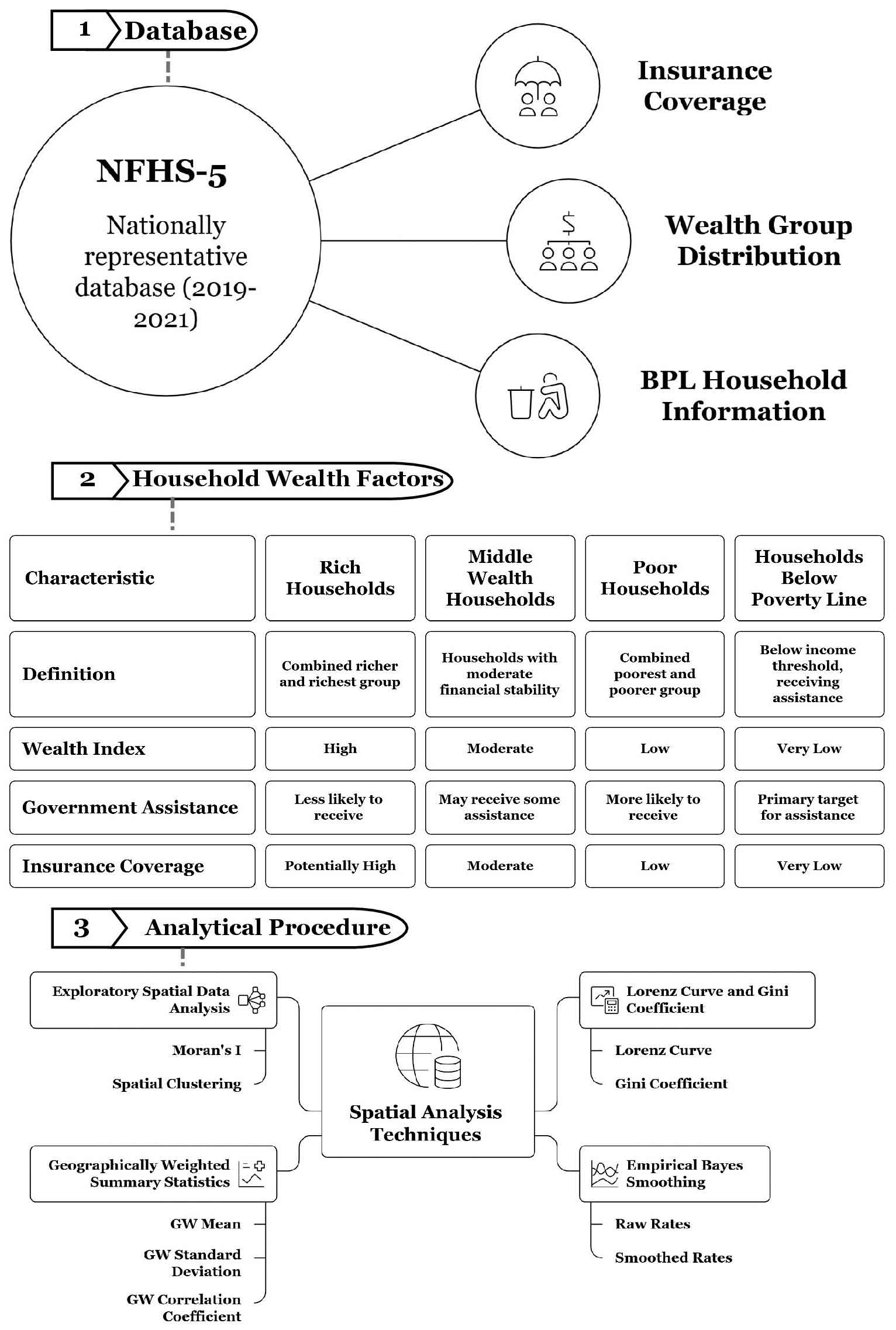
This study spatially analyzes localized geography of health insurance coverage among Scheduled Tribe (ST) households in India, revealing persistent regional disparities using nationally representative data from NFHS-5 and advanced spatial analytical techniques. Employing Exploratory Spatial Data Analysis (ESDA), Geographically Weighted (GW) correlation and Empirical Bayes Smoothing (EBS), the research identifies sign…
10.21523/gcj5.2025090103 914 views 22 Sep 2025
-
pp. 56-68 Open access
Geospatial Mapping and Accessibility Analysis of Eye Health Facilities: A Case Study of Dhaka City Corporation
Mazed Parvez, A H Md Mahabub Nawaz, Faisal M Ahamed, Syed Tanim Ahmed, Laila Begum, Fazle Rabby, Nawal Sarwer
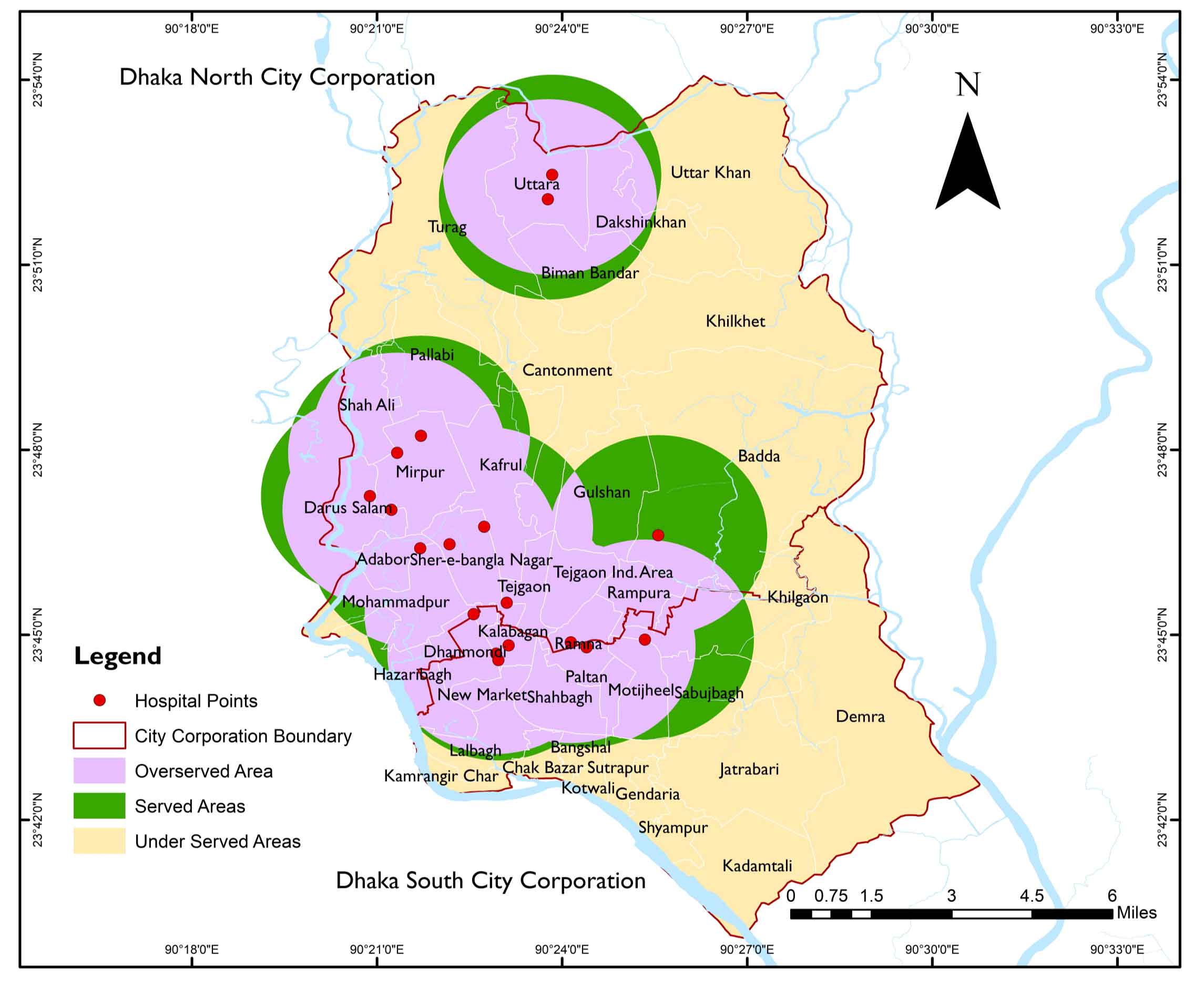
Access to quality eye care is vital for public health, yet in Bangladesh, it is hindered by inadequate infrastructure, limited facilities, and insufficiently trained personnel. This study examines the accessibility and spatial distribution of eye health services in Dhaka City Corporation using Geographic Information Systems (GIS), Eight Key Informant Interviews (KIIs), and Six Focus Group Discussions (FGDs). GIS anal…
10.21523/gcj5.25090104 1,382 views 28 Sep 2025
-
pp. 69-90 Open access
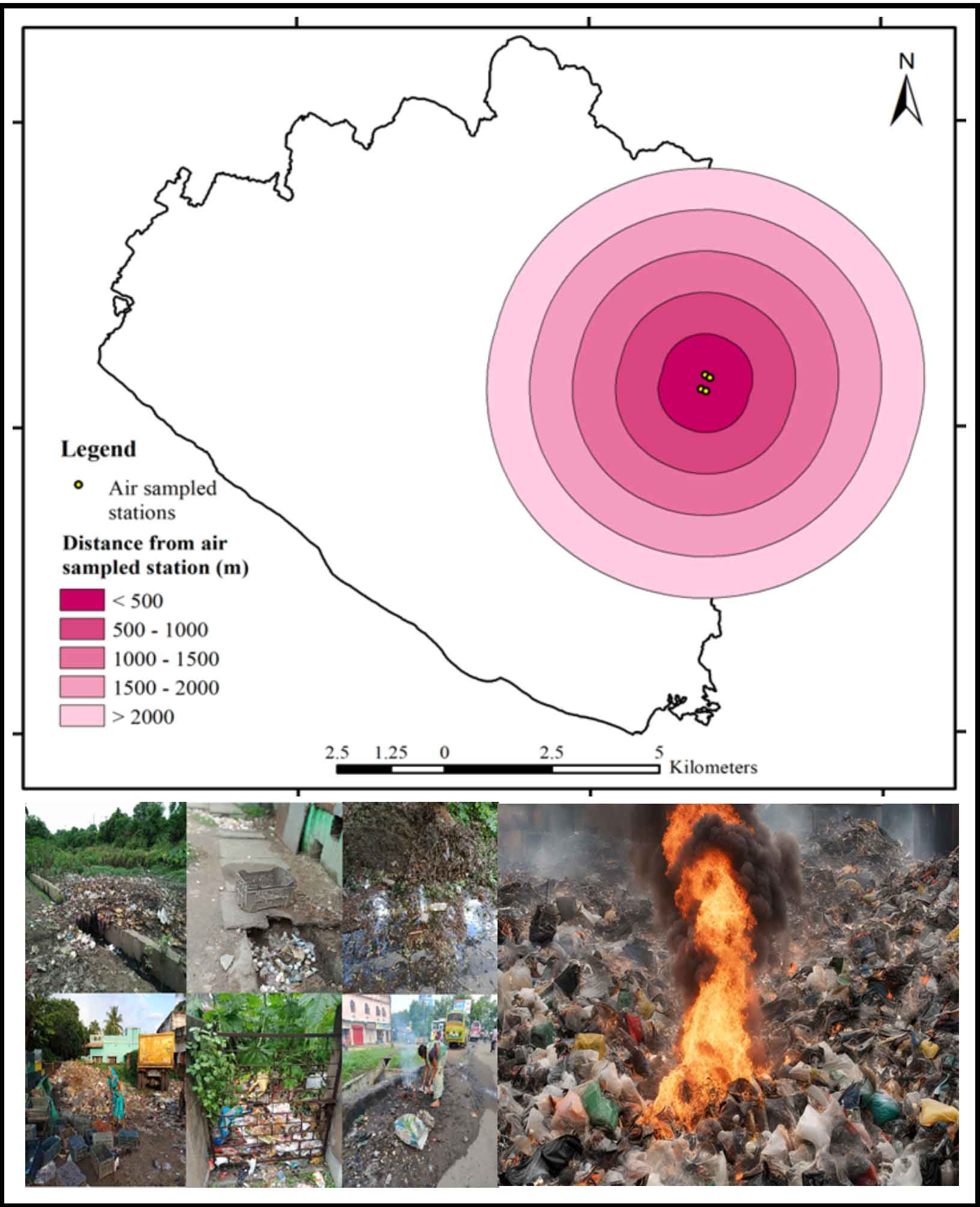
Trash to Trouble: Revealing the Environmental Costs of Poor Waste Management in Durgapur
Rapid industrial, urbanisation and population growth have recently led to increased pressure on the solid waste management infrastructure of Durgapur city, resulting in negative impacts to water and air quality. The study assesses the environmental impacts of insufficient solid waste disposal activities on the groundwater, surface water and air. The results indicate that areas around open dumping sites are severely d…
10.21523/gcj5.25090105 1,500 views 9 Oct 2025


Credits to reviewers (52)
- Dr. Vijay Bhagat, Post-graduate Research Centre in Geography, Agasti Arts, Commerce and Dadasaheb Rupwate Science College, Akole-422601, Ahmednagar, Maharashtra (India).
- Dr. Suyash Kumar, Geology Department, Govt. PG Science College, Gwalior, MP 474009 India.
- Dr. Nitin Mundhe, Post Graduate Teaching & Research Centre, Department of Geography, S. P. College, Pune
- Dr. Archana Patil, RNC Arts, JDB Commerce and NSC Science College, Nashik Road, India
- Dr. Ravindra Medhe, Department of Geography, Savitribai Phule Pune University, Pune
- Dr. Chaitanya Pande, All India coordinate research project for dry land agriculture, Dr. Panjabrao Deshmukh Krishi Vidyapeeth, Akola
- Dr. BHAVANA Umrikar, Department of Geology, Savitribai Phule Pune University, Pune - 411 007 (India).
- Dr. Sanjay Kale, Department of Environmental Sciences, University of Pune, Pune- 411 007.
- Dr. Driss Bouyahya, Moulay Ismail University, Meknès Morocco School of Arts and Humanities
- Dr. Sainath Aher, Post Graduate Department of Geography, S. N. Arts, D. J. Malpani Commerceand B.N. Sarda Science College, Sangamner 422 605, India
- Dr. Mohammad Suhail, AS College, Lakhaoti, BSR, CCS University, Meerut, Uttar Pradesh (India).
- Professor. Shahida Murtaza, Deartment of Women Education,Maulana Azad National Urdu University,Gacchibowli,Hyderabad. 5000032Telengana.India.
- Dr. Taruna Bansal, Department of Geography, Jamia Millia Islamia - A Central University, New Delhi-110025 (India).
- Prof. Lubna Siddiqui, Department of Geography, Jamia Millia Islamia, New Delhi-110025 (India).
- Dr. Saif Said, Department of Civil Engineering, Z. H. College of Engineering and Technology, Aligarh Muslim University (AMU), Aligarh U.P. (India).
- Professor. Shahab Fazal, Department of Geography, Aligarh Muslim University, Aligarh, UP
- Dr. Ananad Malik, Swami Sharadhanand College, Delhi University
- Dr. Firdous Azmat Siddiqui, Sarojini Naidu Centre for Women's Studies, Jamia Millia Islamia, New Delhi
- Mr. Gajendra Singh Yadav, AFC
- Professor. Mohd. Firoz Khan, Department of Geography, JMI, New Delhi
- Dr. Raihan Ahmed, Department of Geography, Jamia Millia Islamia, New Delhi
- Professor. Somnath Dasgupta, Chair Professor, Department of Geography, Jamia Millia Islamia, New Delhi
- Dr. Abhay Kumar, Lokashraya Foundation, A-101, Gauri Sadan, 5-Hailey Road, New Delhi-110001
- Dr. R Islam, Wadia Institute of Himalayan Geology
- Dr. Ajaykumar Kadam, Department of Geology, Savitribai Phule Pune University, Pune
- Professor. Nizamuddin Khan, Department of Geography, AMU Aligarh
- Professor. Abdul Muneer, AMU Aligarh
- Dr. Rajasekhar M, Department of Geology, Yogi Vemana University, Kadapa-516003, Andhra Pradesh (India).
- Dr. Rahul Todmal, VP's ASC College Baramati, Pune (Maharashtra)
- Dr. K. V. Suryabhagavan, School of Earth Sciences, Addis Ababa University, P.O. Box 1176, Addis Ababa, Ethiopia.
- Prof. Syed Ahmad Ali, Department of Geology, AMU Aligarh
- Dr. SHANKAR KARUPPANNAN, Department of Aplied Geology,School of Applied Natural Sciences (SoANS), Adama Science & Technology University, Adama, Ethiopia.
- Dr. Nanabhau Kudnar, C. J. Patel College Tirora, Gondia
- Mr. Sumit Das, Savitribai Phule Pune University, Pune
- Dr. Arun Magar, Department of Geography, Tuljaram Chaturchand College of Arts, Science and Commerce College, Vivekanand Nagar, Baramati- 413102,Maharashtra (India).
- Dr. Santosh Bhailume, Department of Geography, K.V.N. Naik College Nashik
- Prof. Biplab Biswas, Department of Geography, Bardawan University, West Bengal
- Miss. Abhra Singh, Jamia Millia Islamia, New Delhi
- Professor. Mamdouh El-Hattab, Institute of Environmental Studies and Research, University of Sadat City, Egypt.
- Dr. Yogesh Badhe, Department of Geography, Savitribai Phule Pune University, Pune - 411 007 (India).
- Dr. Sagar Mali, Department of Geography,Vidya Prabodhini College of Commerce, Education, Computer and Management, Vidyanagar, Alto-Parvari-Goa.
- Dr. Murugesan Bagyaraj, Department of Geology, College of Natural and Computational Sciences, Debre Berhan University, Debre Berhan, Ethiopia.
- Dr. Selvakumar P, Department of Chemical Engineering, ASTU, Adama, Ethiopia.
- Dr. Md. Baharuddin Shah, P. G. Department of Geography, G. P. Women's College, DHANAMANJURI UNIVERSITY, Imphal
- Dr. Shrinwantu Raha, Bhairab Ganguly College, Belgharia-7,000,56, West Bengal, India.
- Professor. Arjun Doke, Baburaoji Gholap College Sangavi Pune-27 Maharashtra India
- Dr. Sanjay Navale, Department of Geography, S. N. Arts, D.J.M. Commerce and B.N.S. Science College, Sangamner, Dist.Ahmednagar, Maharashtra (India), 422605.
- Professor. Rajendra Zolekar, Department of Geography, K.V. N.Naik College Nashik
- Dr. Shah Fahad, Department of Geography, Institute of Science, Banaras Hindu University, VARANASI
- Dr. Adnan Shakeel, Jamia Millia Islamia, New Delhi
- Professor. Poonam Sharma, Shaheed Bhagat Singh College, University of Delhi, Sheikh Sarai , Phase-II, New Delhi 110017, India
- Dr. MD. Kaikubad Ali, Department of Geography, Jamia Millia Islamia